
Treasures
from the Archives
Our Lady of the Cenacle
Treasures
from the Archives
Our Lady of the Cenacle
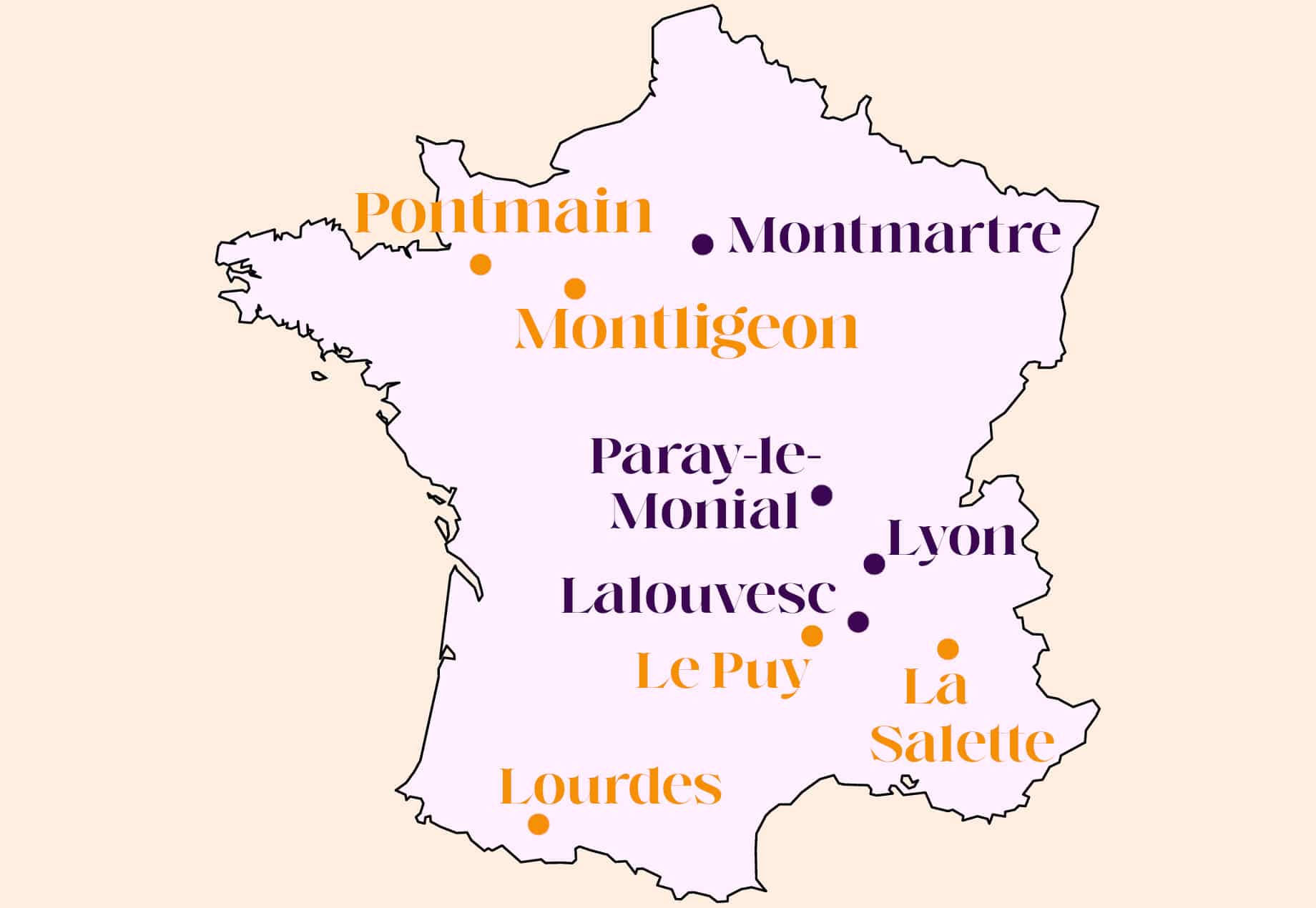
The congregation has maintained a close connection with pilgrimage sites since its beginnings. More than a mere geographical coincidence, this proximity shapes a spiritual identity: that of a place of refuge where the pilgrim’s journey becomes an inner journey.
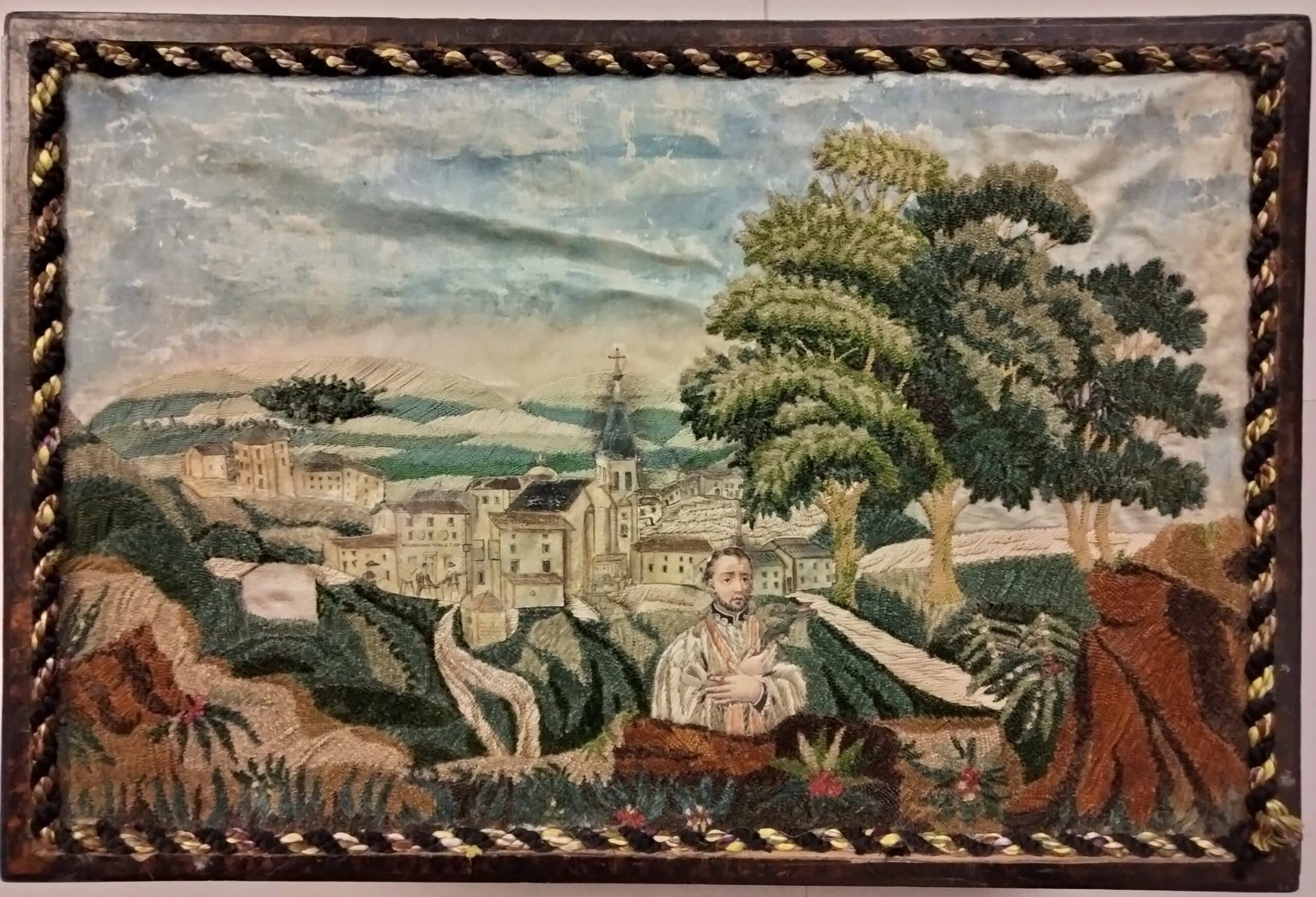
The congregation was founded at a place of pilgrimage and grew by offering women pilgrims spiritual guidance. In Lalouvesc, Father Terme’s initial project was to provide safe shelter for the night to women who came to pray at the tomb of St. John-Francis Regis. Mother Thérèse then obtained permission to welcome only those who wished to spend time in retreat.
Since then, each Cenacle has offered accommodation, board and spiritual guidance. Such hospitality meets the needs of a place of pilgrimage. This is undoubtedly why the Congregation received calls to open houses in a number of towns that are home to shrines. However, not all of these requests could be fulfilled.
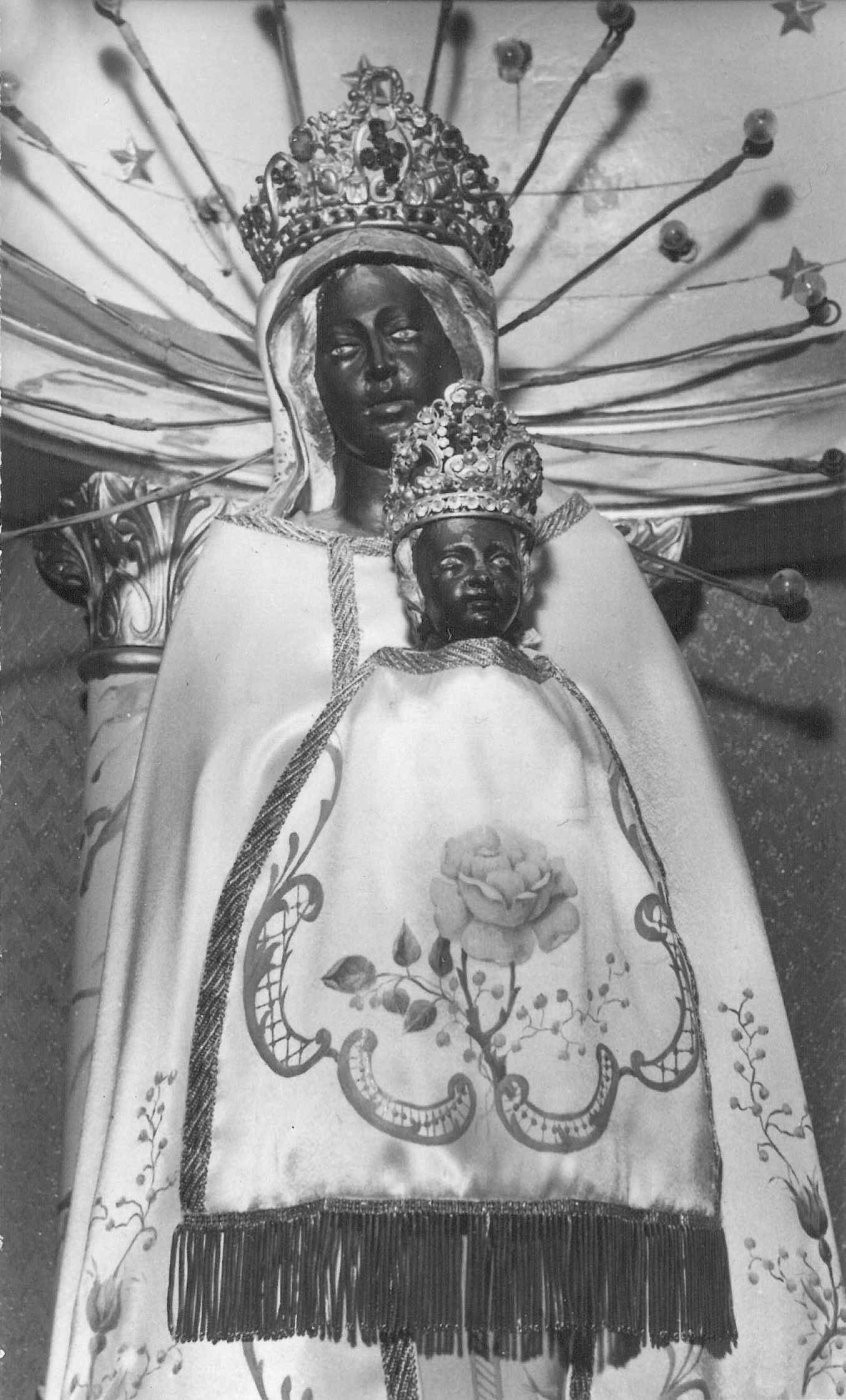
The small shrine of Notre Dame d’Ay, very close to Lalouvesc, has been well known to the sisters since the beginning of their history: they regularly go there on pilgrimage to pray before the statue of the Virgin Mary. It was there that Mother Thérèse made her act of abandonment to the Blessed Virgin Mary in 1837. The sisters did not open a house there. However, as part of their support for the newly formed Congregation of the Sisters of St. Philomena, which was dedicated to young working women, the Cenacle Sisters established a small community of this order in Ay in 1846.
In Lyon in 1842, the congregation’s second foundation was established in the shadow of a sanctuary: a small chapel on the hill of Fourvière housing a statue of Mary, to which the people of Lyon would go on pilgrimage in gratitude. At the time, attendance was relatively low outside of September 8. But a pious woman, Pauline Jaricot, wanted to preserve the neighborhood around the chapel. She therefore bought land in the surrounding area to sell to religious congregations. In this context, she offered a house to the Cenacle. The distance from the chapel was one of the reasons that led the congregation to refuse the purchase:
The house that was offered to us was not suitable, and it was too far from Fourvière, whose popular pilgrimage required us to be close enough to offer easy access to the holy chapel for those who came on retreat, often attracted by the dual purpose of contemplating these holy Exercises and praying to the Blessed Virgin in her beloved sanctuary.
Souvenirs de Mère Thérèse
Shortly afterwards, the congregation purchased a property adjacent to the chapel. Today, the house stands on the square in front of the basilica, which was built at the end of the 19th century due to the growing popularity of the pilgrimage.
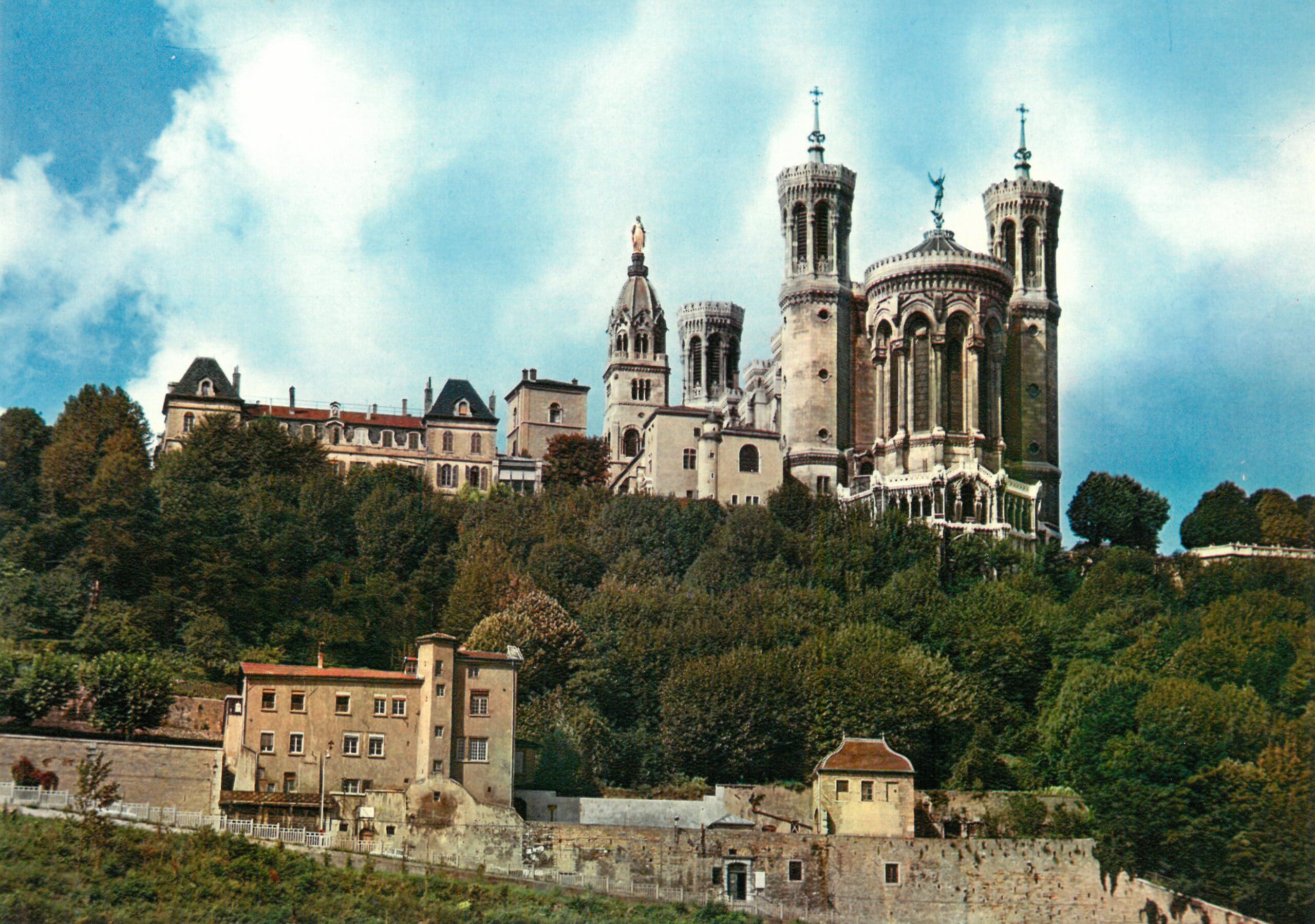
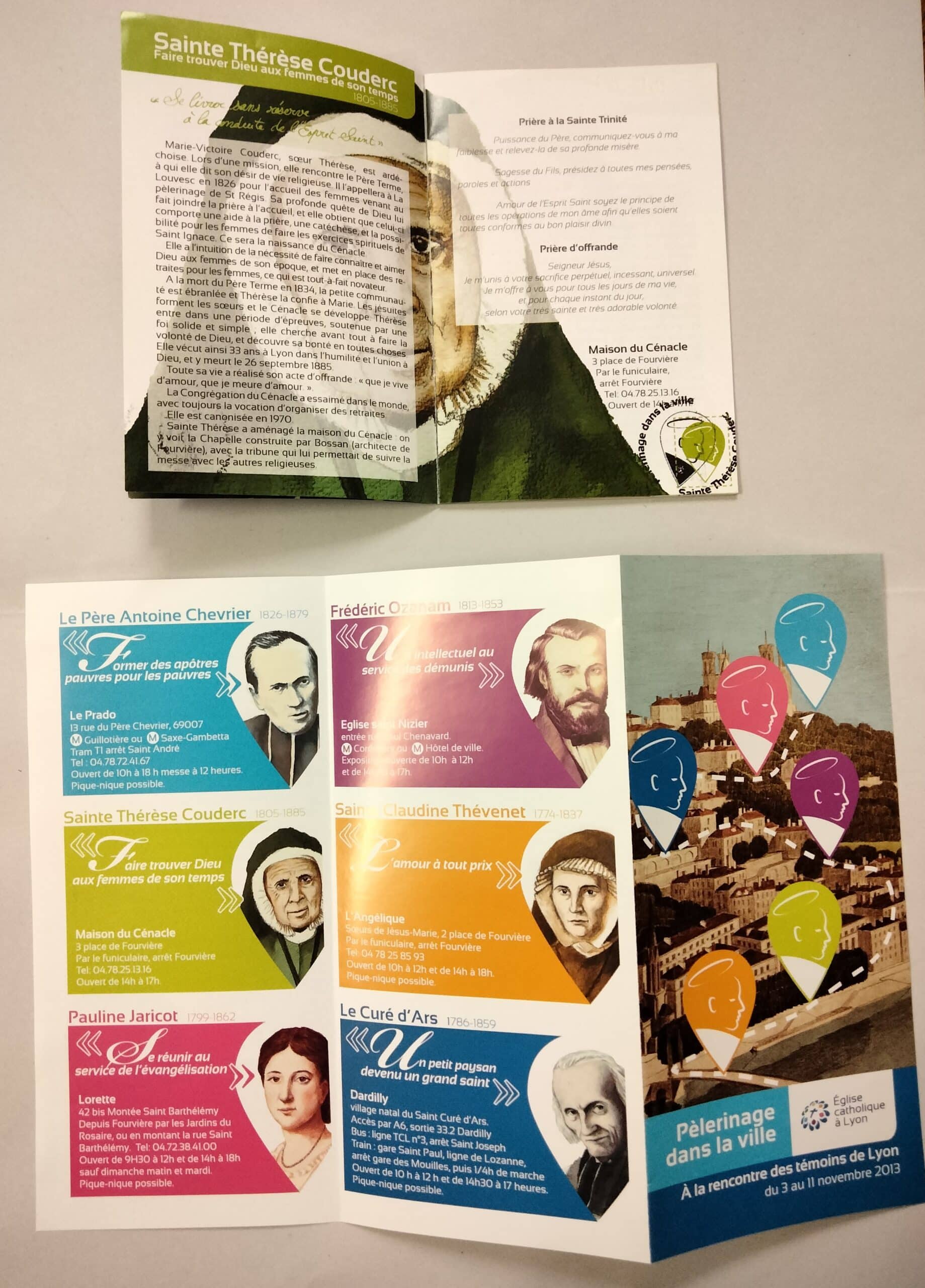
Since Mother Thérèse’s canonization, the Cenacle in Lyon has become a discreet but fully-fledged place of pilgrimage: the room where she ended her days and the chapel where she prayed are places of contemplation for Cenacle Sisters. They are also included as stops on a pilgrimage initially offered to the people of Lyon in 2013.
In 1852, the Congregation received two calls related to pilgrimages. While the Congregation was present in Lalouvesc, Tournon, Lyon, and Paris, a request for a foundation arrived from a missionary in La Salette. This Marian shrine, well known today, was then at the very beginning of its history: the apparitions of the Blessed Virgin to two shepherds in 1846 had just been recognized by the local bishop. He had established — as had been done in Lalouvesc — a society of missionary priests responsible for welcoming pilgrims in the summer and preaching missions in the winter. As moved as the sisters were by the request to go to La Salette, the Congregation did not give it serious consideration. Instead, it took a greater interest in a call to go to Le Puy-en-Velay.
Several reasons influenced this choice:
The desire to establish a presence in Le Puy was strong, as evidenced by no fewer than three separate feasibility studies between 1852 and 1857. However, the following factors ultimately led to a refusal on the part of the Congregation: it was only a temporary mission in the context of a special Jubilee organized in Le Puy, and the Congregation’s human resources, especially at a time of tension with the Paris community, were insufficient for the task.
Some twenty years later, in 1872, France was struggling to recover from war and a period of revolution in Paris. For many, these misfortunes were primarily due to spiritual causes, and it was important to bring the country back to God, in particular by developing devotion to the Sacred Heart.
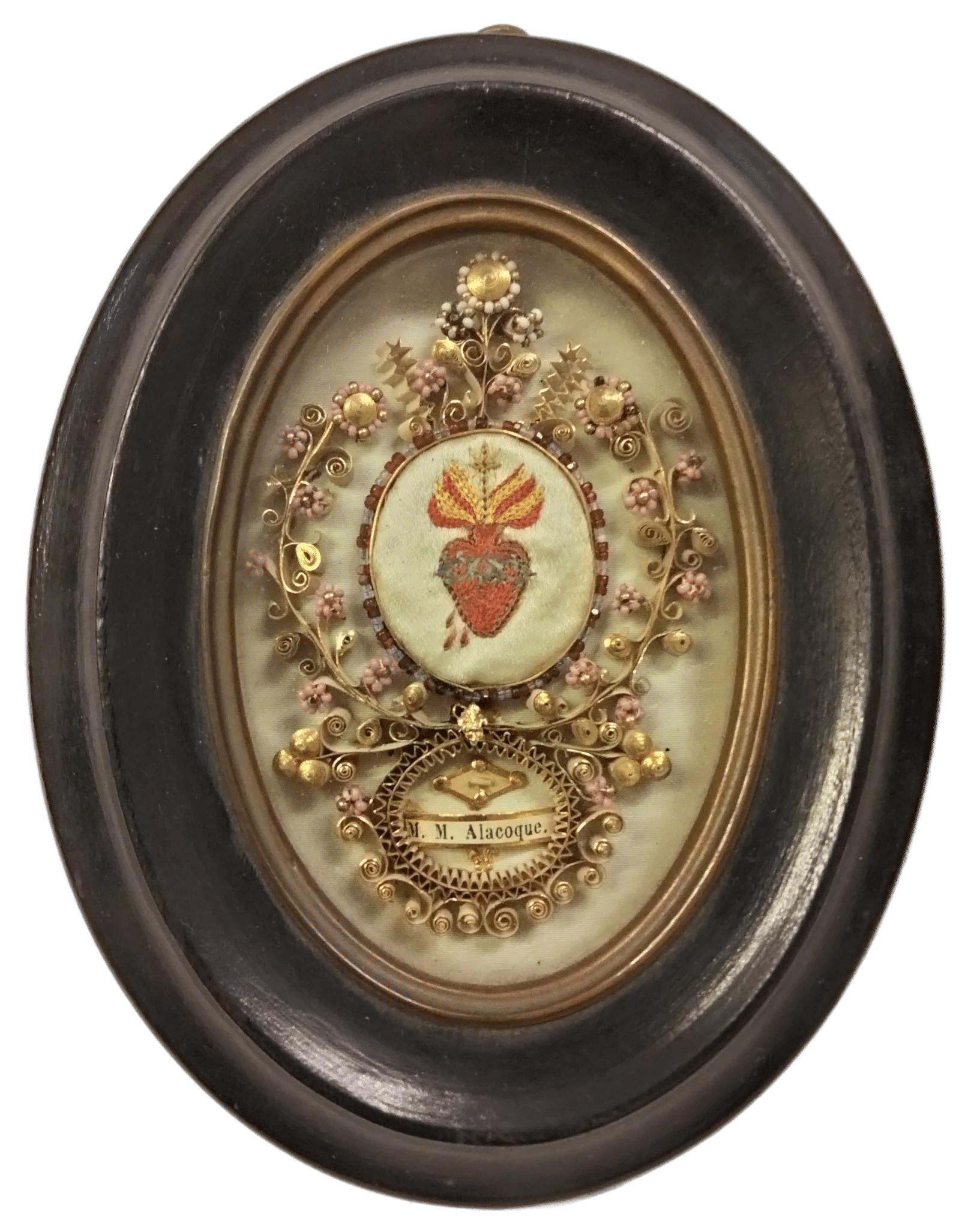
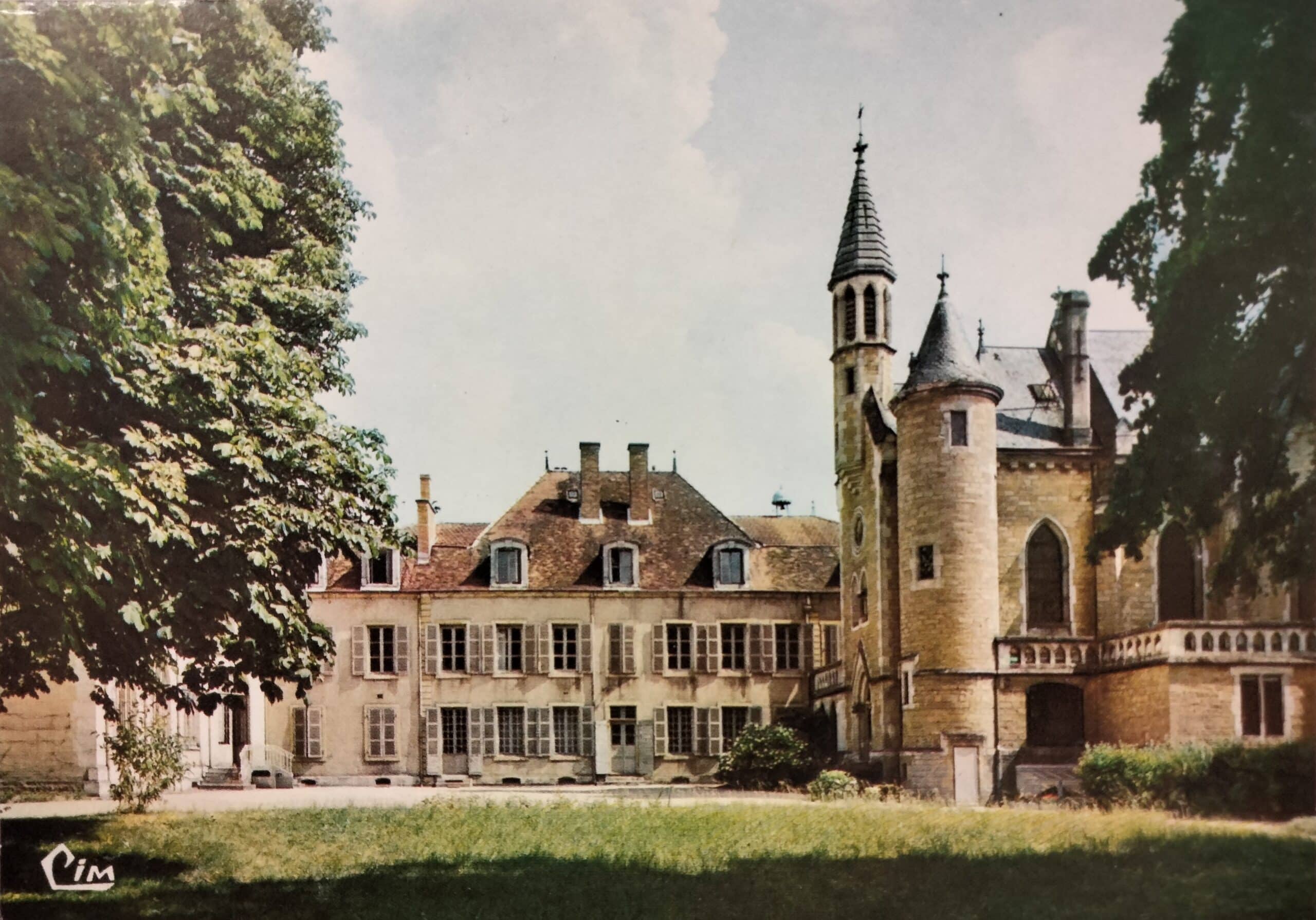
The Cenacle was no stranger to this movement. In 1872, just after the Superior General Mother de Larochenégly had consecrated her Congregation to the Sacred Heart, she received a call to found a community in Paray-le-Monial, the city of the Sacred Heart. The bishop, the Jesuits, the Visitation Sisters, and a benefactor invited her to do so. The foundation was established in January 1873. That year marked the bicentennial of the first apparitions of the Sacred Heart in Paray-le-Monial to Margaret Mary Alacoque, and saw the organization of large national pilgrimages, which quickly took on an international dimension.
The Congregation therefore helped to receive the pilgrims who were flocking to the shrine, successfully offering retreats until the 1960s. A sharp decline followed. But the pilgrimage was revived in 1975, thanks in particular to the Emmanuel Community, which decided to offer sessions there every summer. Sister Marie-Thérèse Sallantin, r.c., who had met Pierre Goursat (the founder and leader of this movement belonging to the Charismatic Renewal) in Paris, organized the very first of these sessions, with the help of two other Cenacle Sisters. Subsequently, and until the house closed in 1990, the Congregation concentrated on its ministry of retreats, spiritual direction, and discernment.
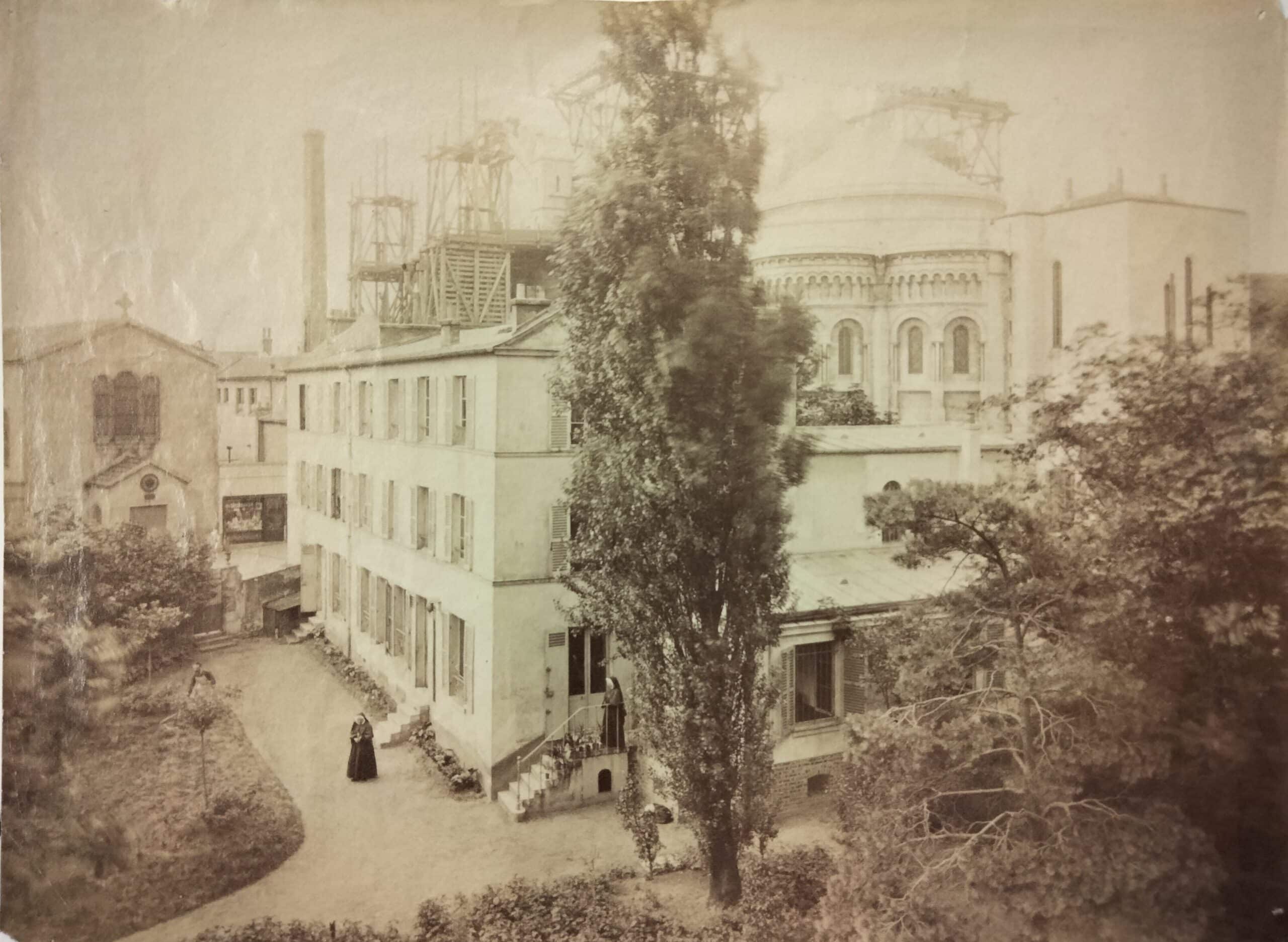
In 1890, the Cenacle Sisters settled in Montmartre, also linked to a devotion to the Sacred Heart. Archbishop Guibert of Paris invited the Congregation to establish a presence on this hill, where a sanctuary dedicated to the Sacred Heart was being built. The Cenacle was one of the congregations invited to settle there to provide for the material and spiritual needs of pilgrims.
Here, as elsewhere, the Congregation did not participate in the organization of the pilgrimages. But in the Montmartre retreat house, the pilgrims benefited from spiritual support and the community benefited from a source of retreatants. The Cenacle also hosted activities organized by the chaplains of the basilica. The proximity was even greater in the early days because, as the construction of the basilica was not completed at the time of the house’s foundation, the entrance to the temporary chapel was opposite that of the retreat house.
In the congregation, for example in Mother Thérèse’s correspondence, the houses are referred to in terms of their pilgrimage: when the Sisters go there, it is said that they are going on pilgrimage to (the tomb of) Saint Regis (Lalouvesc, also known as the “holy mountain”), to the Blessed Virgin (Lyon) or to the Sacred Heart (Paray-le-Monial).
Thus, on June 15, 1878, Mother Thérèse wrote to Mother de Larochenégly, assistant general, who was in Paray-le-Monial:
I am confident that the Heart of Jesus, whom you went to pray to in that blessed and venerated place where He has worked so many wonders of grace and blessings, will console yours a little [...].Mother Bertier especially begs you and urges you to come on pilgrimage to the Blessed Virgin, after you have completed your pilgrimage to the Sacred Heart.
Like Jerusalem , Lourdes represents one of the longest subjects of discernment for the Congregation as a place of pilgrimage without a completed foundation.
In 1883, the Cenacle was called to Lourdes. This foundation was strongly desired by the Archdiocese of Paris despite the reluctance of the local bishop’s office. The Benedictines of the Blessed Sacrament, who were leaving the town, sought to sell their newly built monastery. Negotiations failed in 1884 because of the amount of money the Cenacle Sisters would have to invest at a time when a bill to confiscate the property of religious congregations was in the works.
This was not the only call to establish a retreat house in Lourdes. Several lay friends put forward the idea: as early as 1874, but also in 1892, 1920, and 1930. In 1899-1900, the search for a property was in full gear. In particular, the possibility of buying one opposite the grotto was explored, but the asking price was too high for the Cenacle.
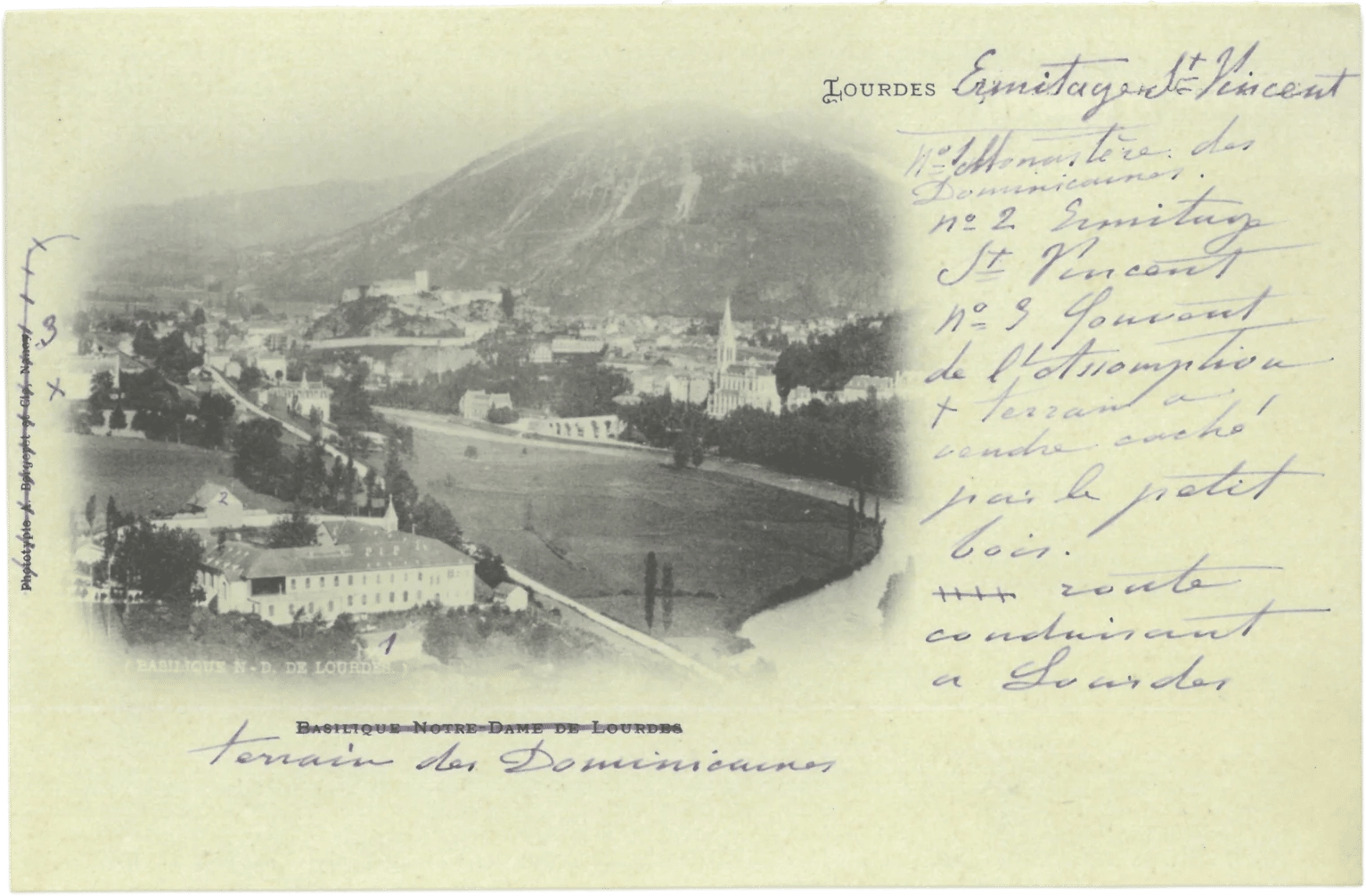
Then, in 1940, at the prompting of two laywomen, the bishop of the diocese, Monsignor Choquet, made a request for the establishment of a community of Cenacle Sisters. The Superior General Mother Jeanne Corneau and her councilors were very tempted by the adventure, but the outbreak of World War II and the occupation of France prevented them from responding favorably.
Negotiations therefore failed for financial, legislative, and historical reasons (the outbreak of war in 1940). However, this constant interest proves how much the Cenacle felt that its presence in the Marian city would be in keeping with its apostolic charism.
The calls to establish communities in Pontmain and Montligeon show that the spirit of the Cenacle, its expertise, particularly in its connection with pilgrimages, were widely recognized and appreciated by the clergy.
In 1891, the congregation was asked to come and settle in La Chapelle-Montligeon, where a pilgrimage dedicated to prayer for the souls of the deceased had just begun. The director of the sanctuary wrote to inquire about the possibility of the Cenacle establishing a foundation in the parish: “I have heard with great joy about the great good you are accomplishing through the retreats you offer in your establishments located specifically in places of pilgrimage.” However, the congregation did not respond positively to his request.
At the end of World War II in 1946, the bishop of Laval (France), Cardinal Paul Richaud, called on the Cenacle to establish a foundation in Pontmain, the site of apparitions of Mary. According to the cardinal, the apparition of Mary “particularly recommended prayer there. A retreat house is therefore needed in this place,” he wrote. He even found a house for sale that would be suitable for a community. But the General Chapter had just voted to close a house in Voiron due to a lack of Sisters. It was not possible to consider a new foundation.
The appeal for Cenacle retreat houses at pilgrimage sites transcended borders. Mother Marie Aimée Lautier, Superior General, had a strong desire to establish the congregation in Loyola (Spain), the birthplace of Saint Ignatius, and therefore a place of “venerated pilgrimage.” The plan was to offer retreats to female pilgrims there. From 1888 to 1892, she discreetly investigated this possibility. But it seems that she then focused on other more advanced projects: the foundations of Bordeaux and Montmartre in 1891, and Montpellier and New York in 1892.
In 1895, the congregation briefly considered the possibility of establishing a presence in Genazzano, Italy, where the Church of Our Lady of Good Counsel had become a local pilgrimage site following a miracle in the 15th century. It is unclear, however, whether this foundation was considered in connection with the shrine and its pilgrimage.
In Turin, where a house was founded in 1881, the community became involved in another type of occasional pilgrimage: the exposition of the Holy Shroud, which takes place on exceptional occasions. The 1898 exposition, for example, was an opportunity to offer hospitality to a number of pilgrims.
In 1918, at the end of the dispersal period, the sisters of the Toulouse community were offered a country house near the sanctuary of Notre Dame d’Alet, about 30 kilometers northwest of the city. They organized retreats there for three summers, until 1920, when they were forced to give up the house because of its remoteness and the “difficulties in obtaining the necessary material resources.”
Today, wherever it is located, the Congregation responds to specific requests. Some sisters are therefore called upon to work in shrines; for example, leading a retreat at Notre-Dame de la Garde in Marseille or taking part in the Holy Cord procession in Valenciennes.
On a personal level, they also maintain a strong connection with pilgrimage. For example, one sister entered the Cenacle after completing a solo walk from Compiègne to Rome in 1950 on the occasion of the Jubilee Year. Another sister was born into the faith during a trip to Lourdes. And many more…