
Treasures
from the Archives
Our Lady of the Cenacle
Treasures
from the Archives
Our Lady of the Cenacle
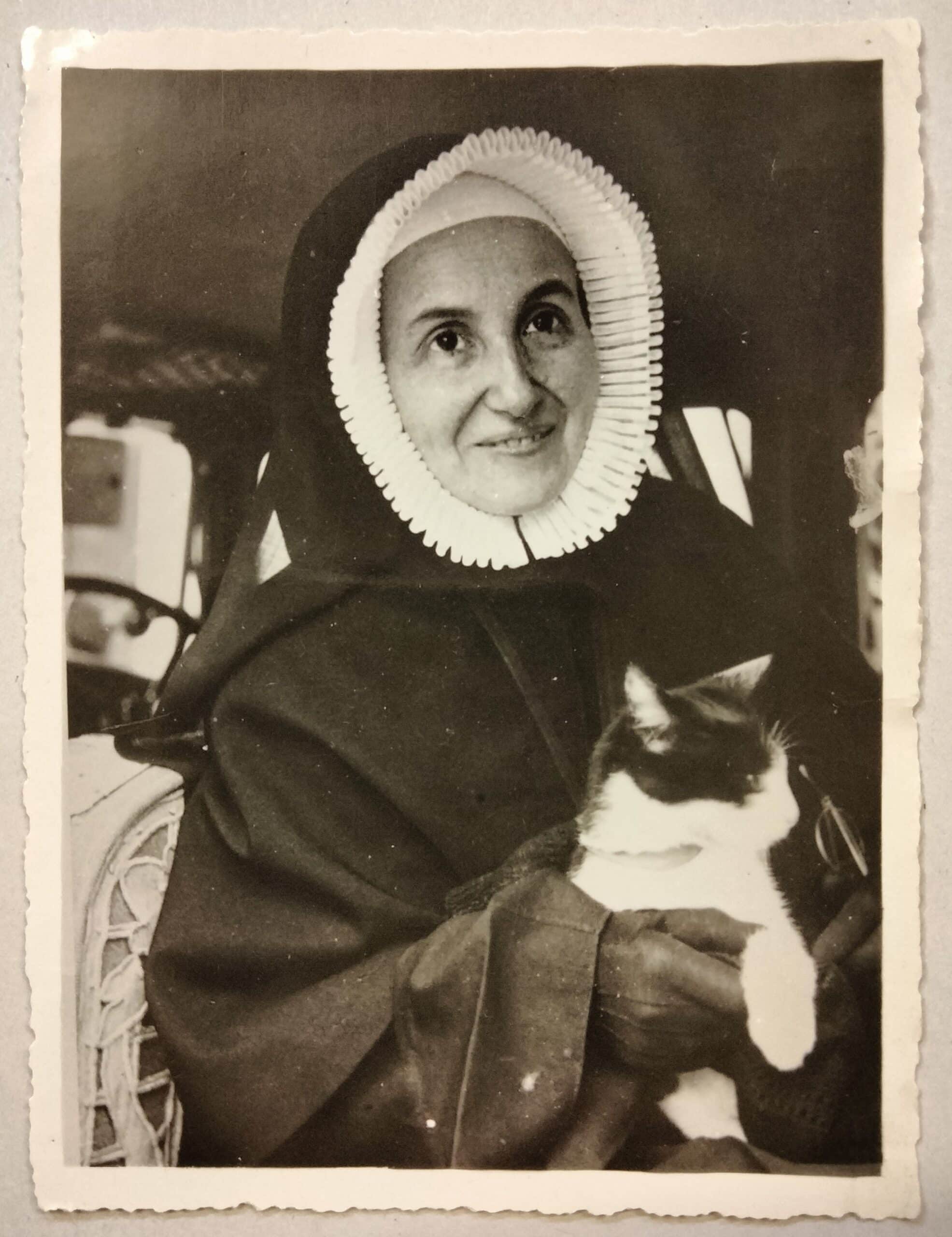
Mother Marguerite Dufraisse (1882-1943)
Source: ACF, 3S2 /37.3
For nearly 20 years, from 1924 to 1943, Mother Marguerite Dufraisse carried out her ministry at the Cenacle of Avenue de Breteuil in Paris, working primarily with children. She was specifically responsible for catechism classes for children aged 4 to 8, including preparation for First Communion, and later for the catechism of perseverance offered to 12- to 15-year-olds (in between, a parish catechism class took over). Mother Marguerite Dufraisse’s course, structured as a coherent and progressive whole over the years, takes the form of ongoing conversations or exchanges. It aims to form the heart and conscience, to instruct the intellect, and to exercise the will to take action: to reflect, discover, desire, choose, and decide.
Through the radiance of her inner life, combined with a genuine gift for connecting with children, Mother Dufraisse left a lasting impression on people’s hearts and minds. She died prematurely in 1943, but her method, taken up and promoted by the Cenacle, continued to bear fruit in the lives of generations of children for at least thirty years.
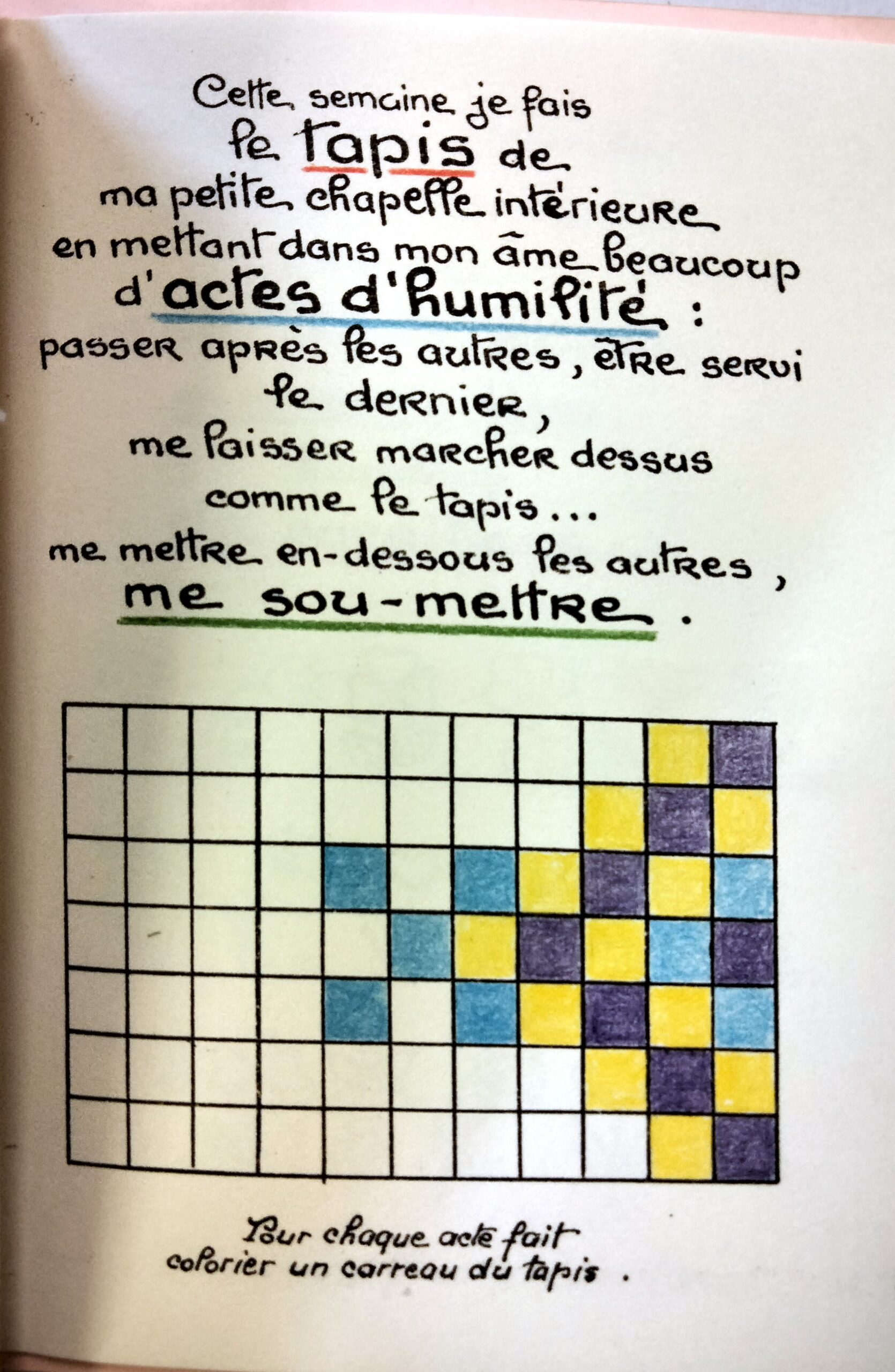
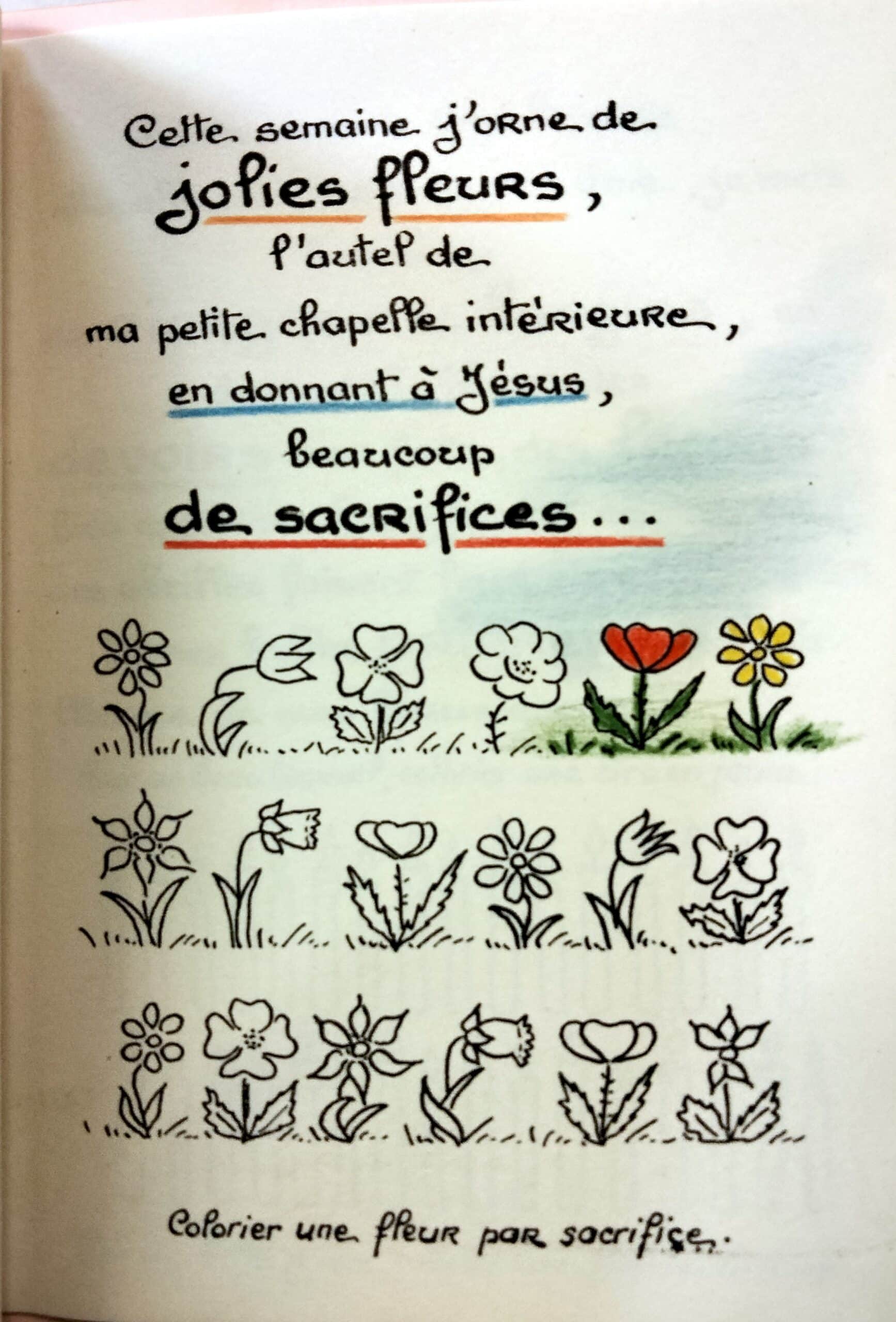
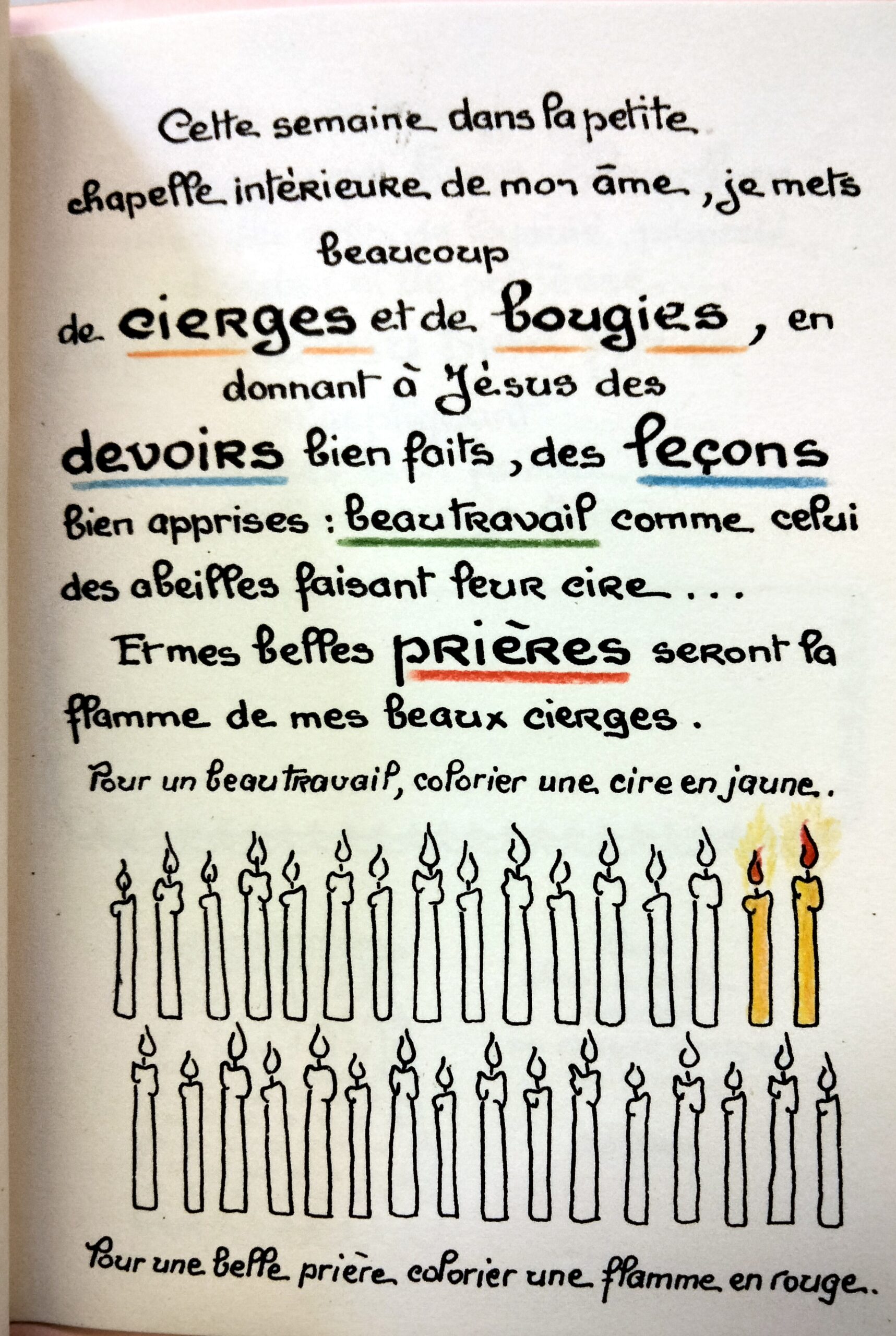
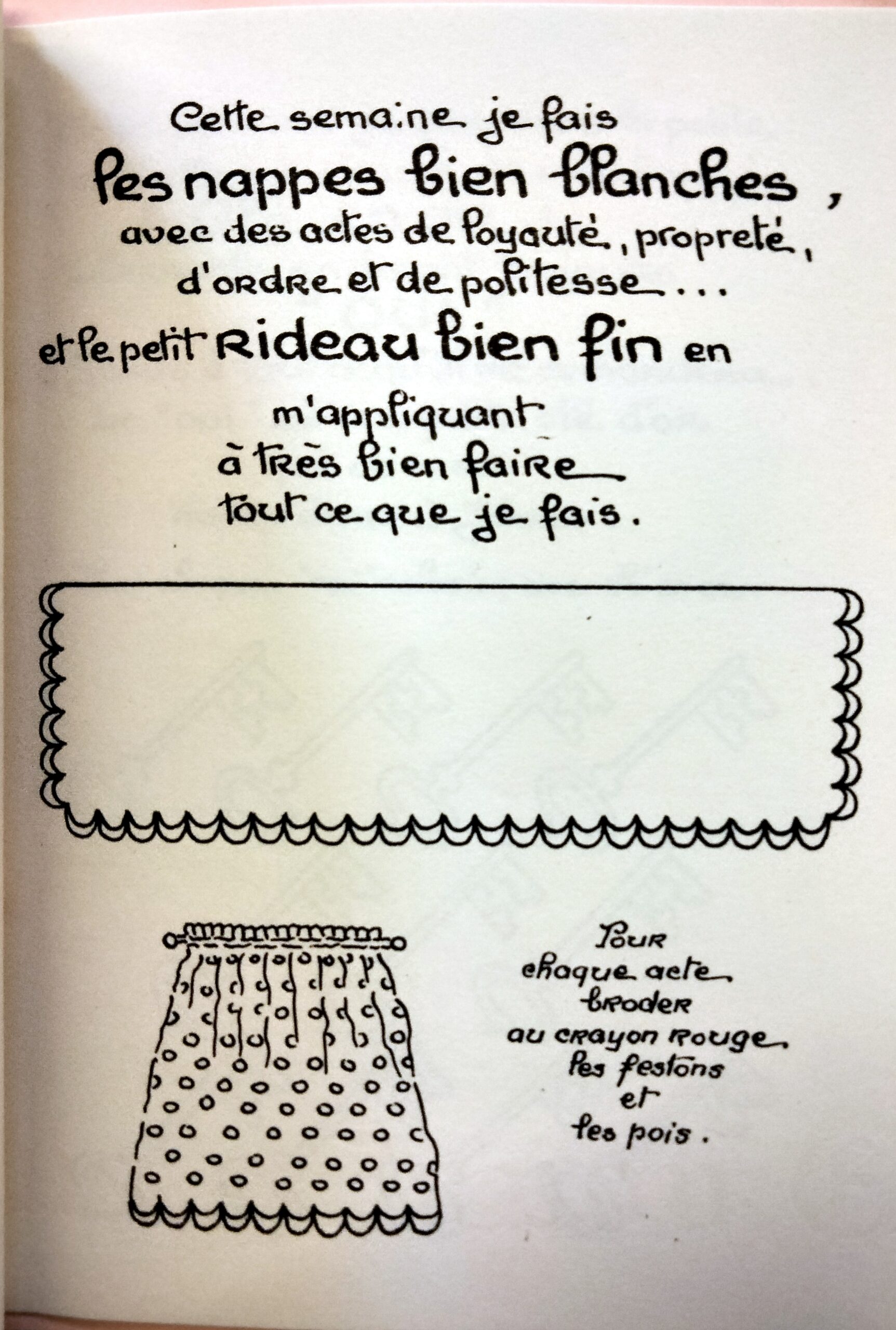
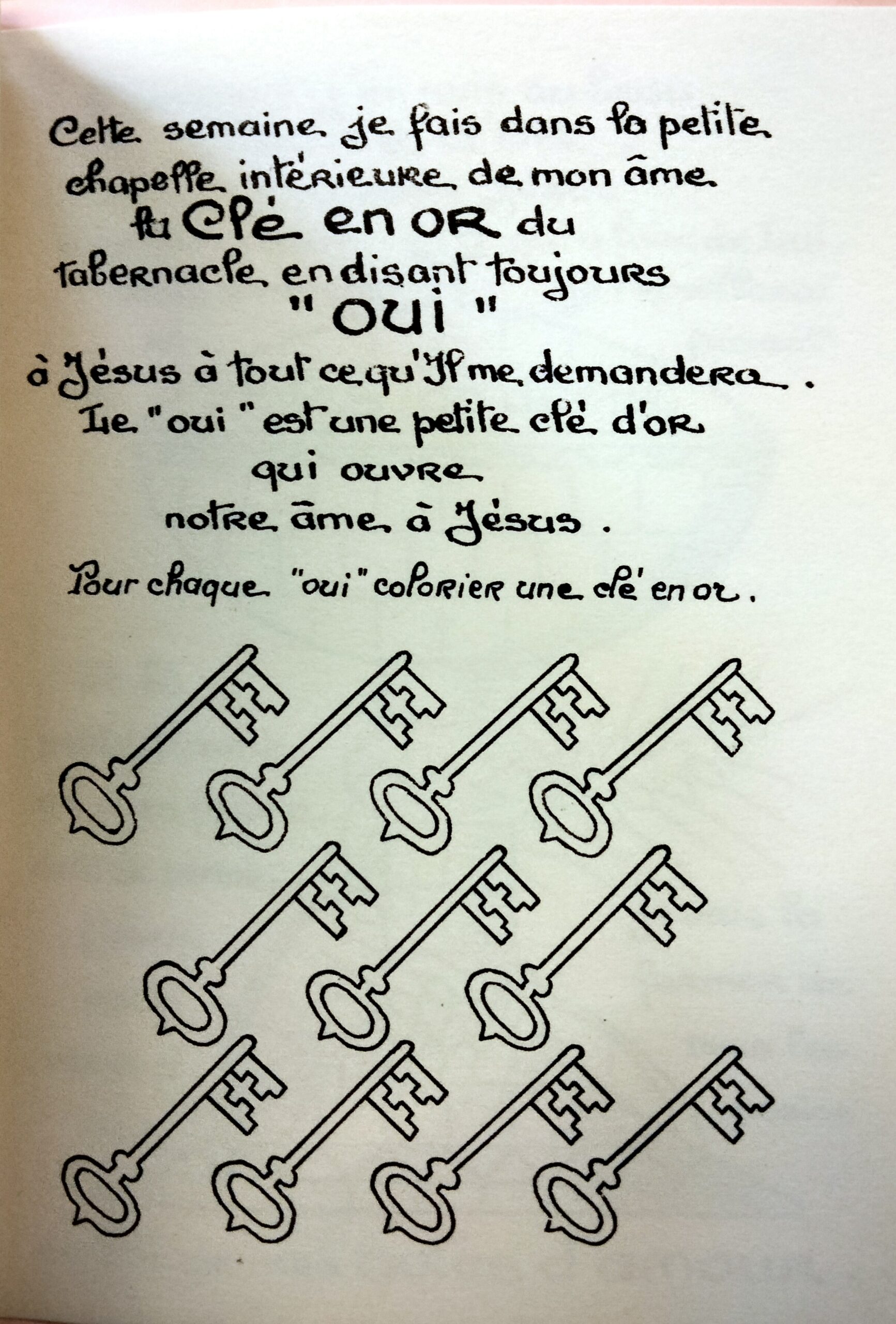
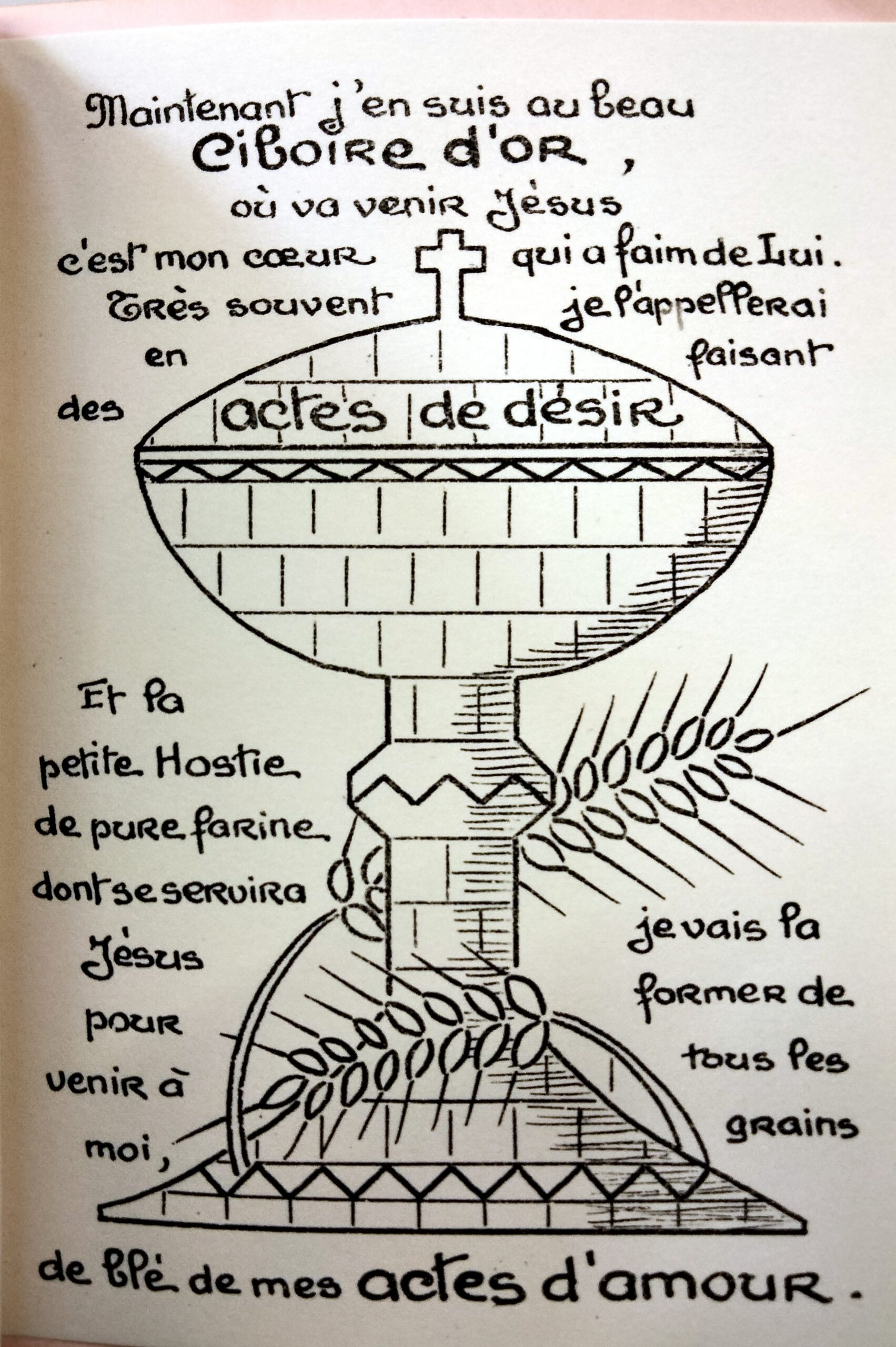
In Madagascar, for example, Mother Gabrielle Moulet created this illustrated workbook to prepare for First Communion. It compares the preparation of the soul to the preparation of an inner chapel, where each element requires special care – serving as opportunities to cultivate corresponding spiritual attitudes. Each week, one of these is highlighted using a concrete example. At the end of the session, the child is invited to take ownership of their inner journey: for each action taken, they can add color to the illustration.
The gallery shows the progress over the course of seven weeks:
Week 1: Carve the stones of the altar with acts of obedience, cemented by acts of gentleness
Week 2: Weave the squares of the carpet with acts of humility
Week 3: Decorating with flowers – each representing a sacrifice
Week 4: Adding candles to every duty well done and flames to every prayer
Week 5: Preparing white tablecloths delicately embroidered with acts of loyalty, cleanliness, order, and politeness
Week 6: Make the little golden key to the tabernacle by saying “yes” to Jesus
Week 7: Prepare the golden ciborium through acts of longing, and prepare the flour for the host by gathering grains of wheat and performing acts of love
First Communion Preparation Workbook, based on the notes of Mother Marguerite Dufraisse
Source: ACF, 3 J [M] 94
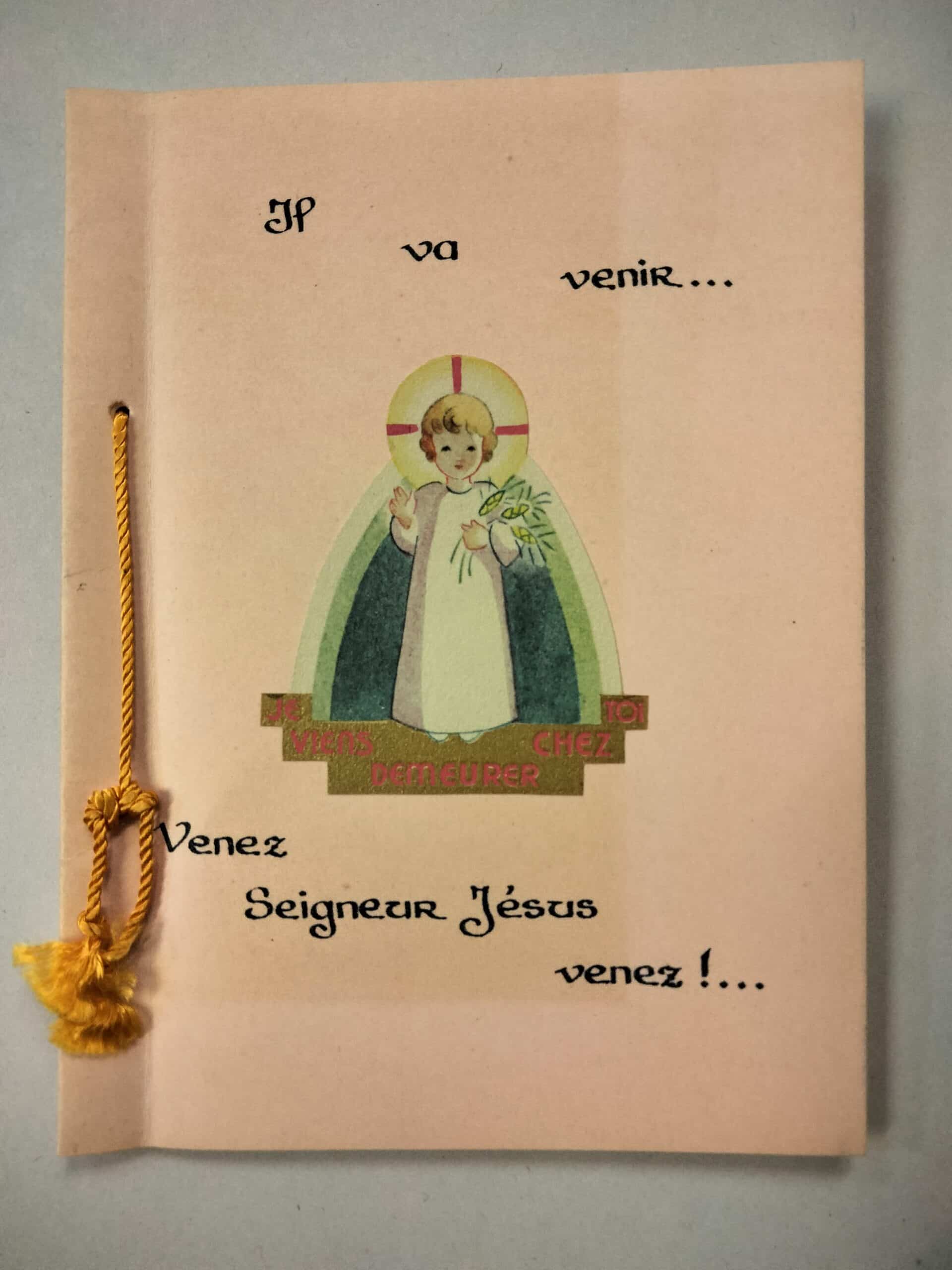
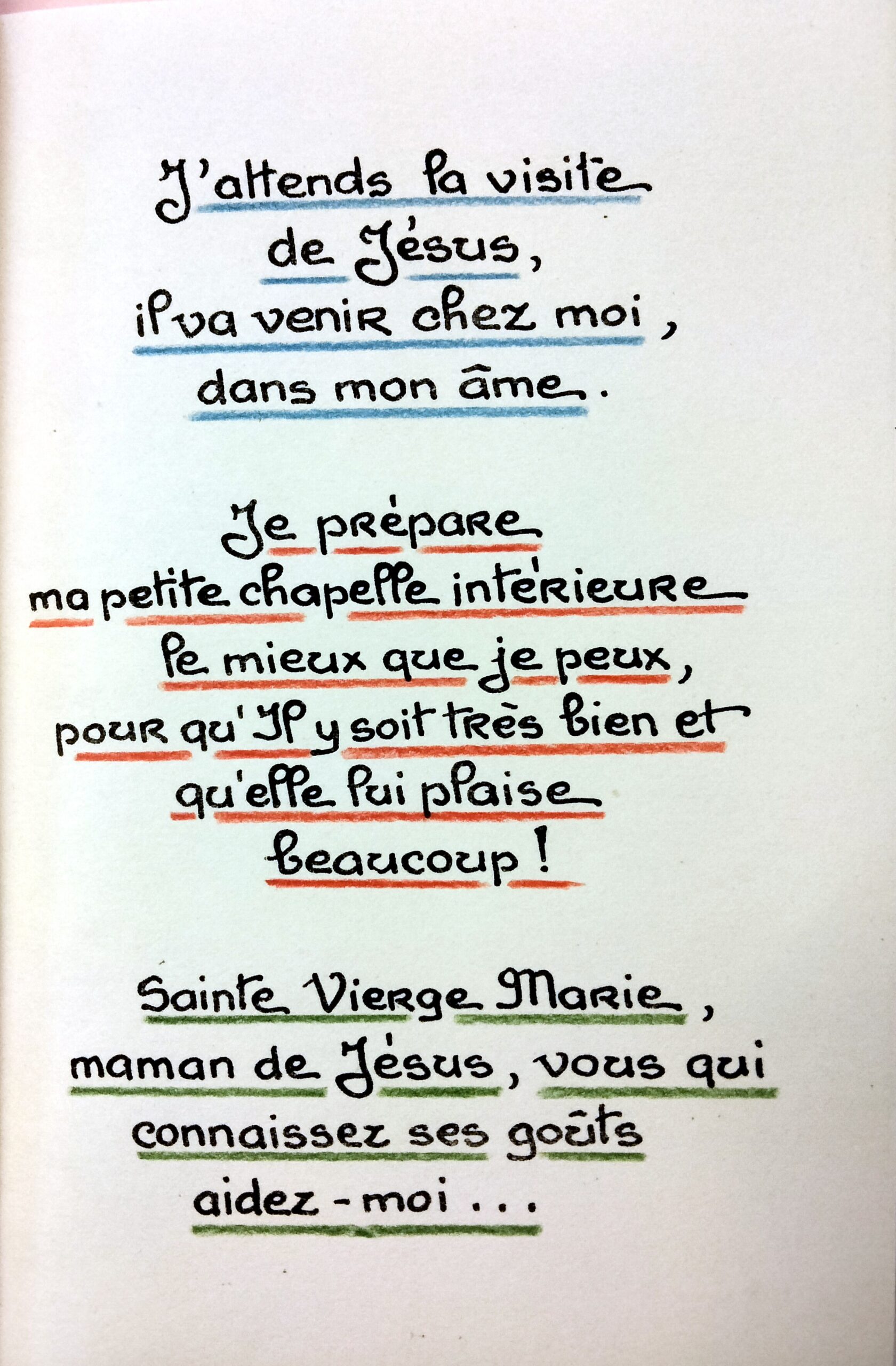
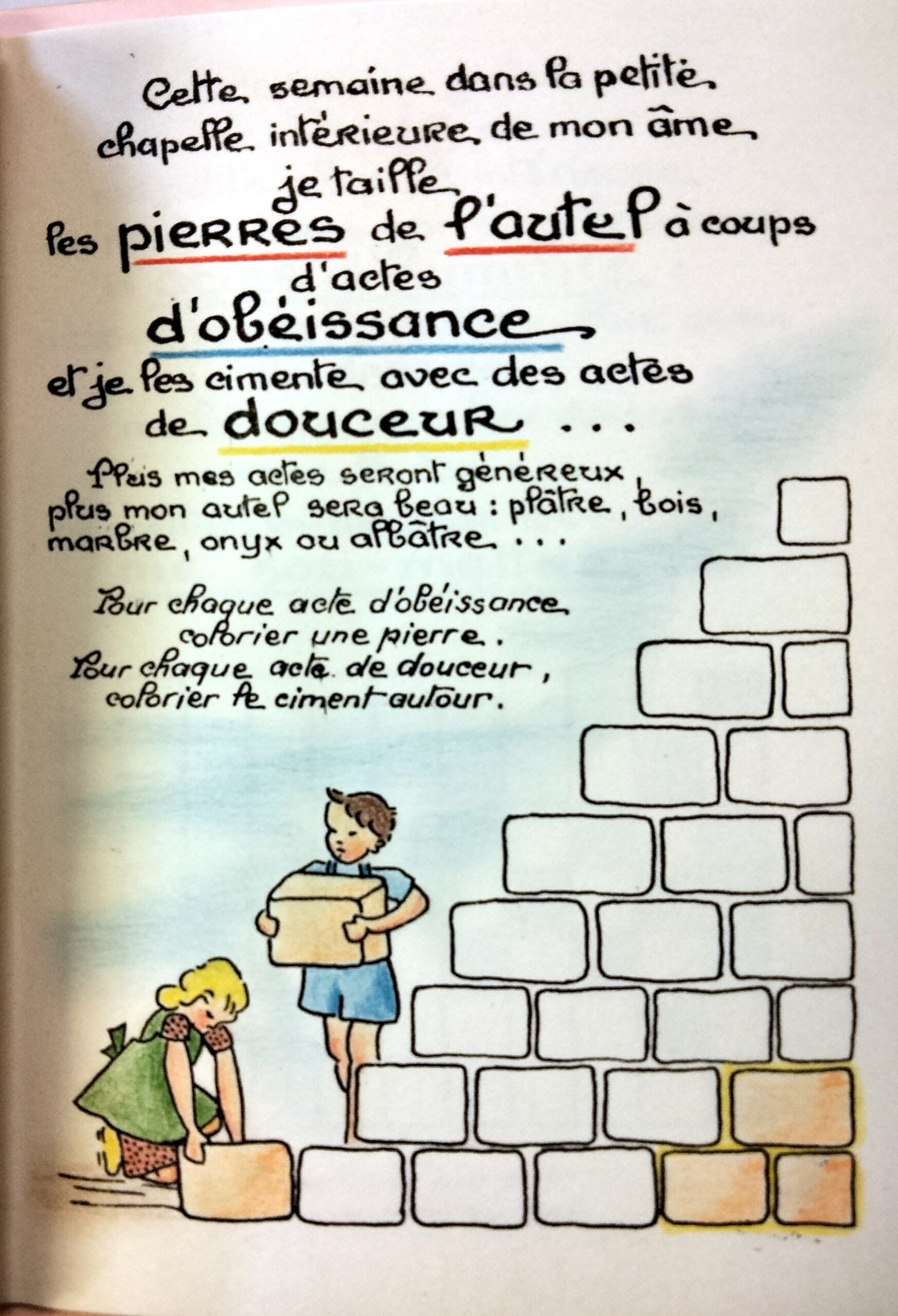
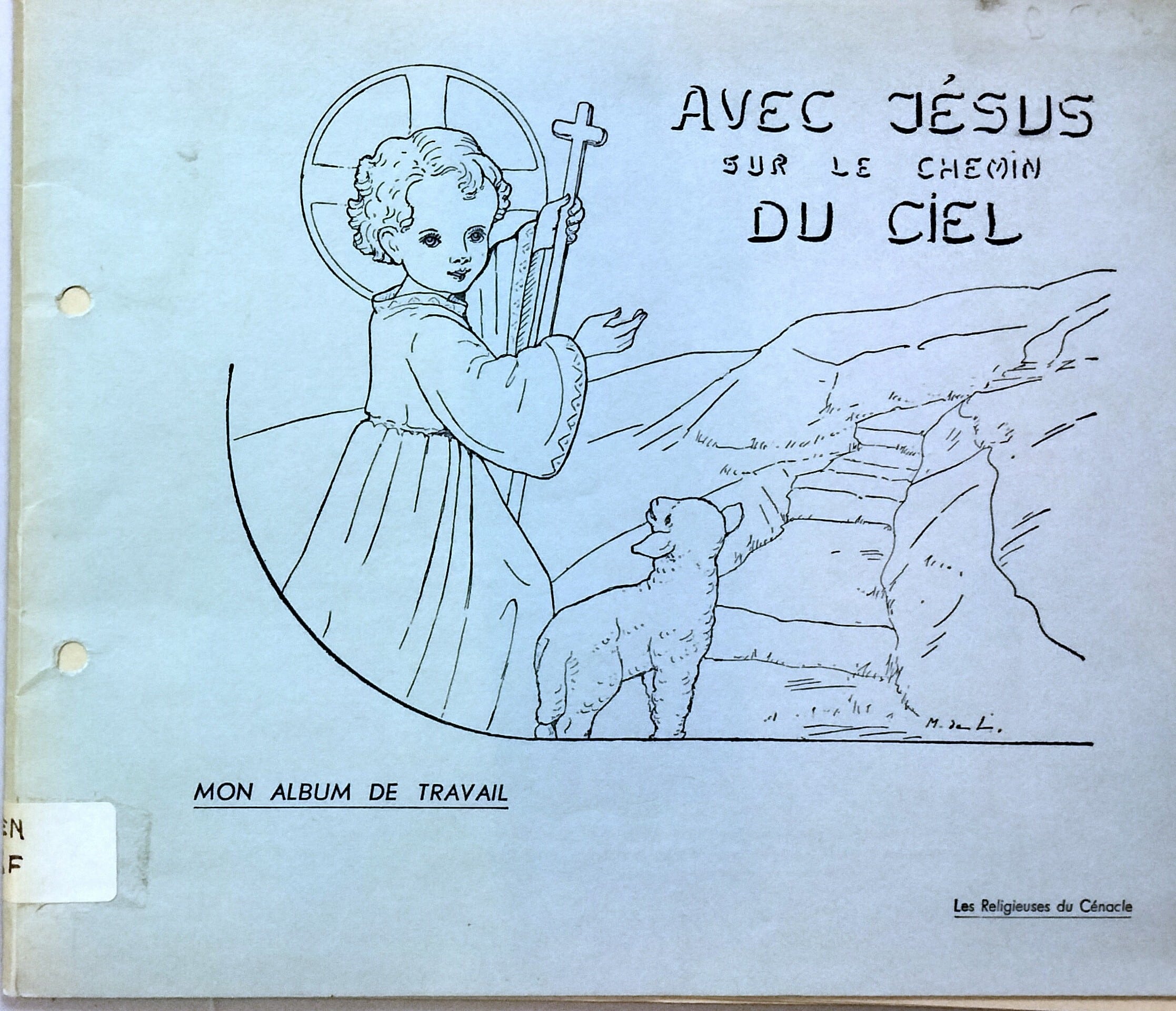
With Jesus on the Path to Heaven: Mother Marguerite Dufraisse’s method for children, adapted by Mother Antoinette Chicot
Source: ACF, 3M2 /16
After World War II, catechetical training was organized at the diocesan and even national levels. In a letter dated December 25, 1944, the Superior General, Mother Jeanne Corneau, emphasized: “Our vocation [… is to be] centers of catechetical instruction.” The sisters decided to share the fruits of their experience. They participated in the training of volunteer lay catechists. They also tasked Mother Antoinette Chicot, who had succeeded Mother Dufraisse, with publishing works based on the latter’s notes and method: “A Child’s Early Moral and Religious Education” came out in 1946, followed by “With Jesus on the Path to Heaven” in March 1947.
The latter is a set of 30 worksheets designed to facilitate an equal number of catechesis sessions. It is supplemented by a workbook for the child, which helps them internalize each lesson. Mother Chicot oversaw its reprinting, with occasional revisions, well into the 1980s. The book was translated into Portuguese in Brazil in 1951 and then into English for the United Kingdom in 1956.
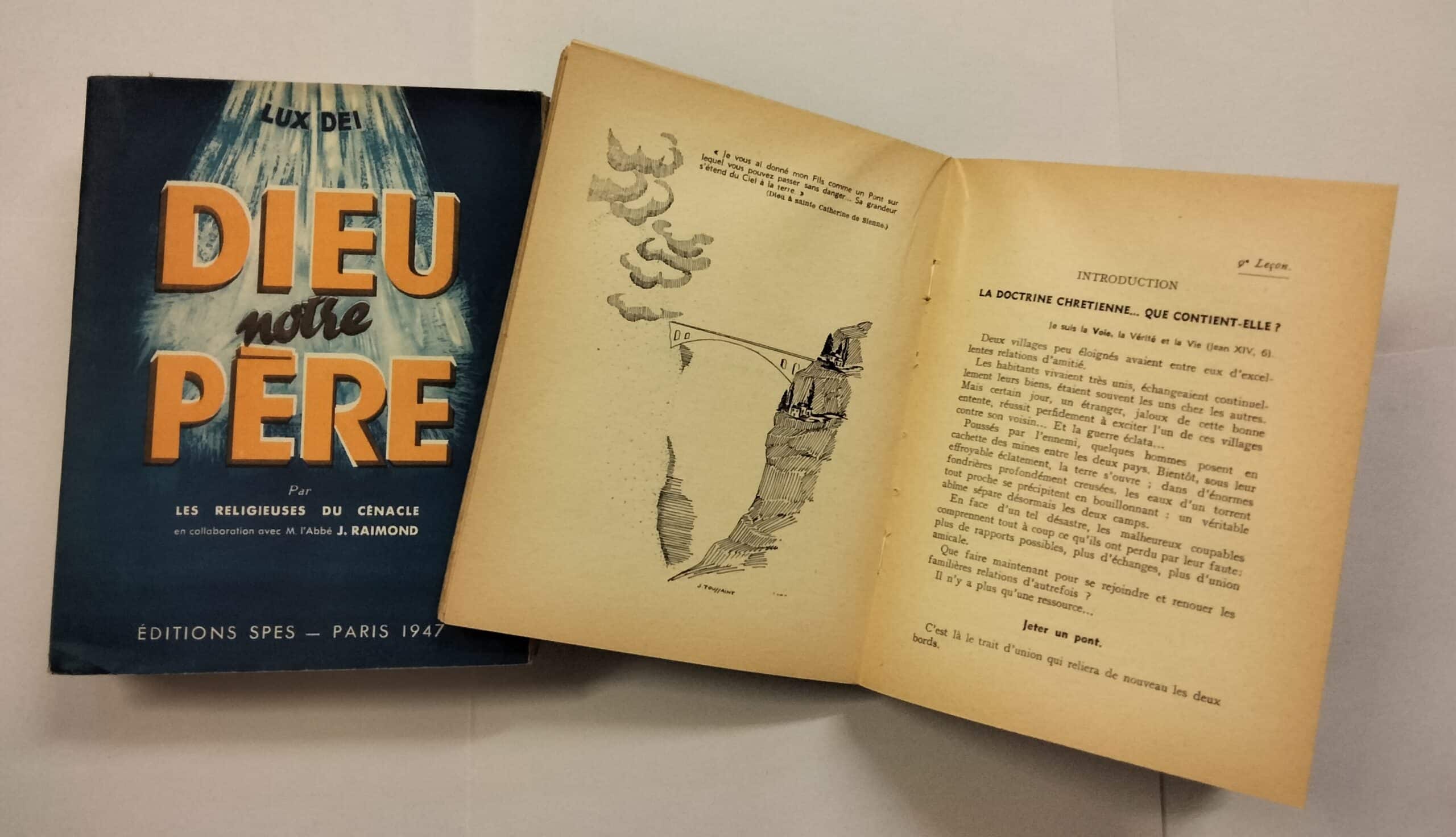
God Our Father: Mother Dufraisse’s method for teenagers
Source: ACF, 3M2 /23
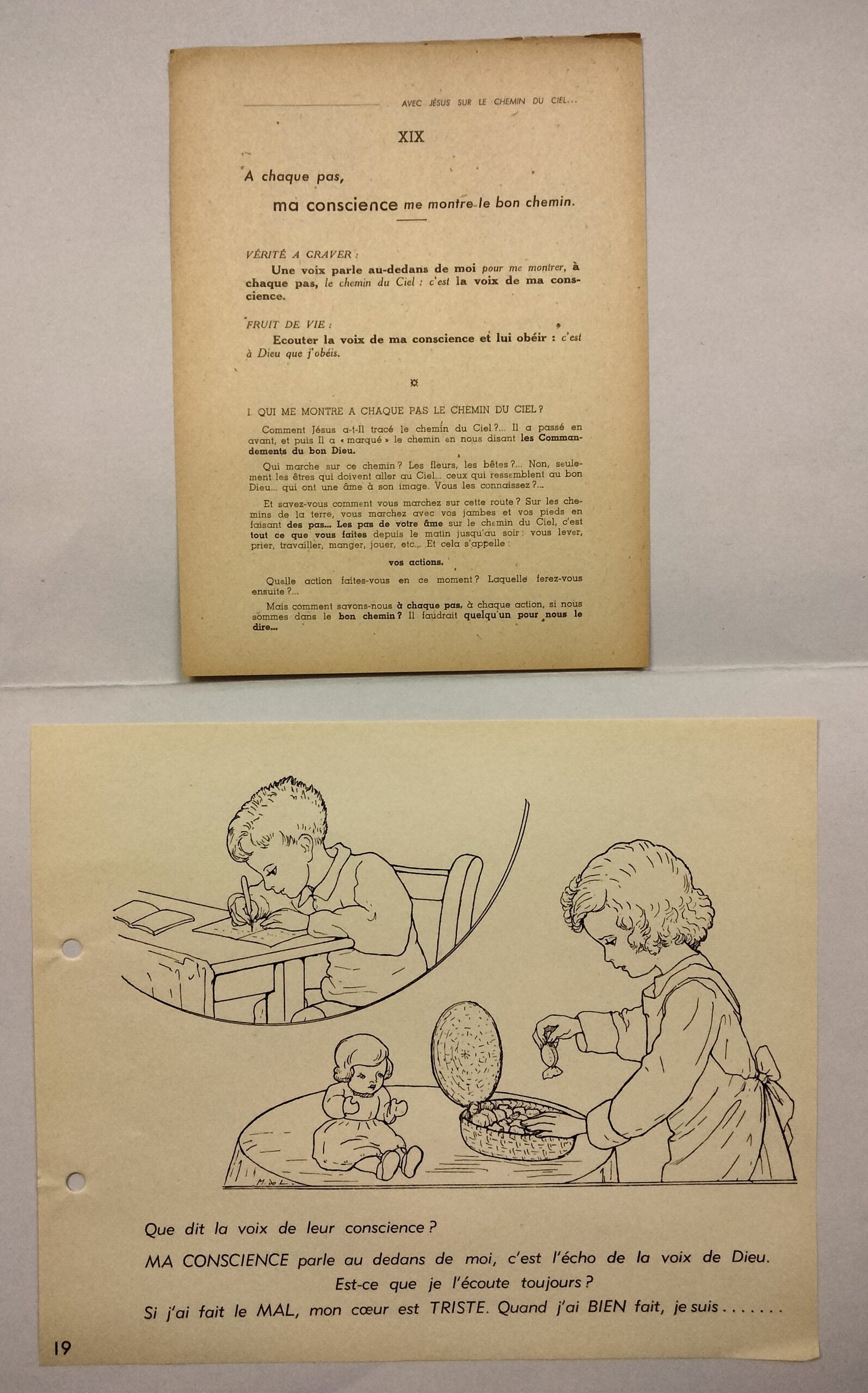
With Jesus on the Path to Heaven: Mother Marguerite Dufraisse’s method for children, adapted by Mother Antoinette Chicot. Lesson 19 on conscience: teacher’s guide and student worksheet.
Source: ACF 3M2 /12 and 3M2 /16
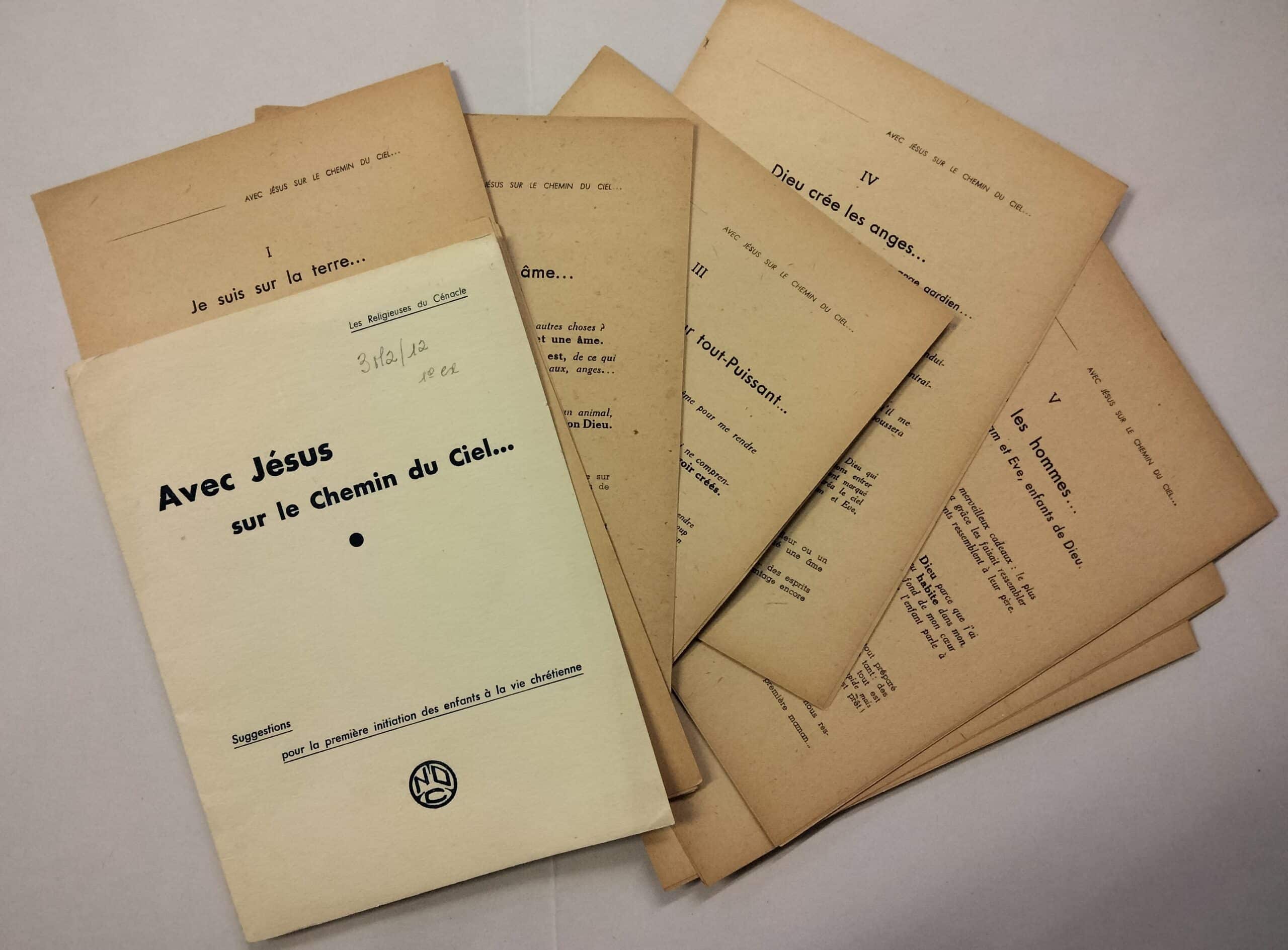
“Avec Jésus sur le chemin du Ciel” (With Jesus on the Path to Heaven): Mother Marguerite Dufraisse’s method for children, adapted by Mother Antoinette Chicot. Catechist’s booklet, including various worksheets
Source: ACF, 3M2 / 12
Mother Marguerite Dufraisse’s course is designed for children aged 4–5 to 7–8, transitions into parish catechism, and then offers a program known as “perseverance formation” for 12–15 year-olds. It was this course for adolescents that Mother Chicot published at the request of the Cenacle in 1947, with the assistance of Father Joseph Raimond: like the previous one, it consists of a volume for the educator and a volume for the student.
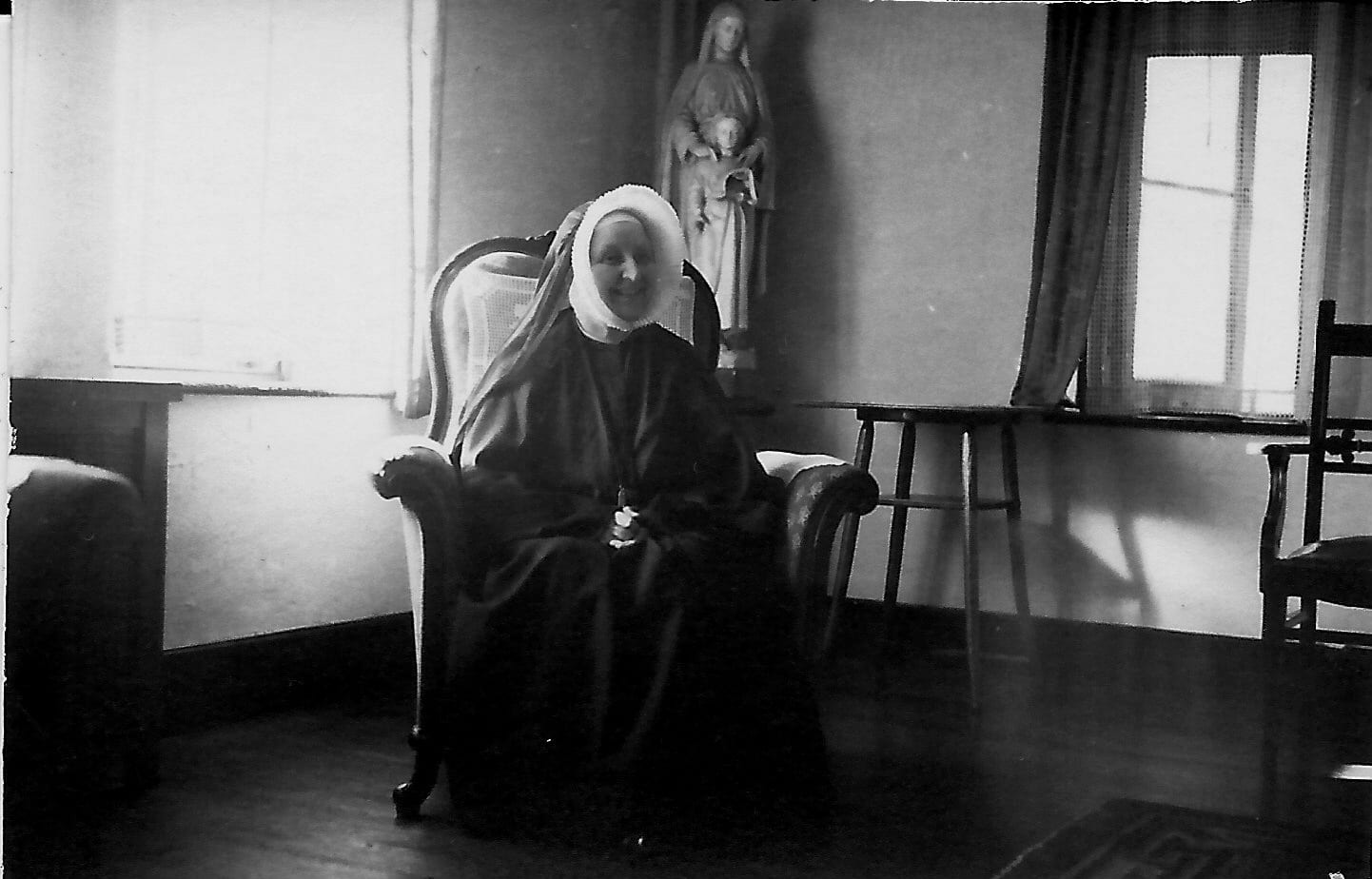
Mother Margaret Bolton, r.c., at the St. Regis Cenacle in New York City, United States, undated (circa 1920s)
Source: NAP, P-III Photographs Collection, PH201_334
The story of the St. Regis Club for Children and Mother Bolton’s Spiritual Way Method of teaching Christian Doctrine started in 1914. Mother Marie Majoux, local Superior of the St. Regis Cenacle in New York City as well as Vicar of the Cenacles in the United States, had long wished for the Cenacle Sisters to have a hand in teaching public school children, and in 1914 her prayers were answered when a Catholic teachers organization asked the Cenacle to become one of 46 centers in the diocese for the religious instruction of public school children. The teachers, some of whom were loyal Cenacle retreatants, personally brought hundreds of children from the surrounding public schools to the St. Regis Cenacle and even helped with teaching the classes. The St. Regis Club for boys and girls taught Christian Doctrine as well as sewing, cooking, millinery (hat-making) for the girls, and crafts for the boys. The club met three to five afternoons a week.
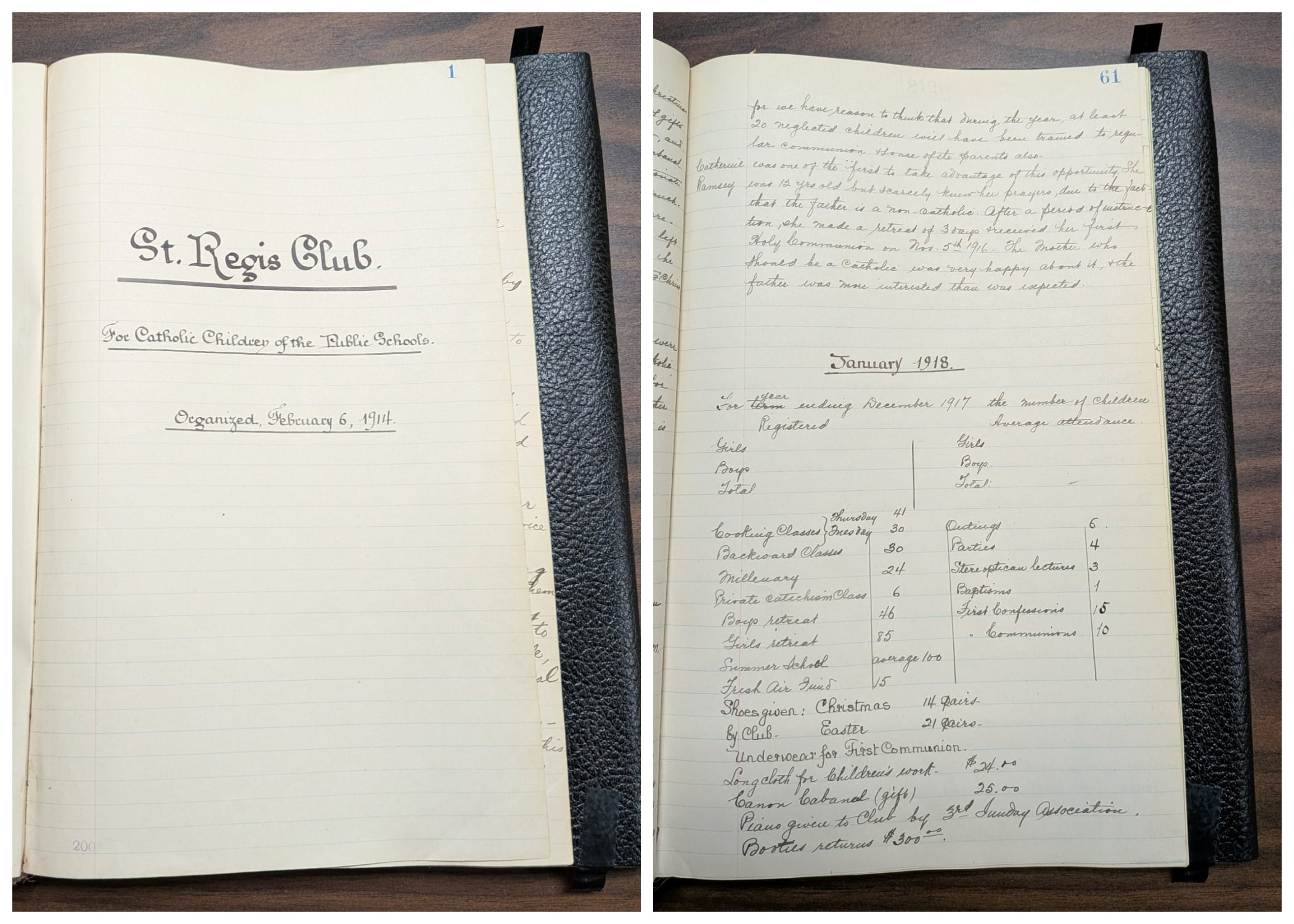
St. Regis Club journal with a report from January 1918 showing attendance at cooking and millinery classes, as well as outings, parties, and lectures.
Source: NAP, A-II St. Regis, New York
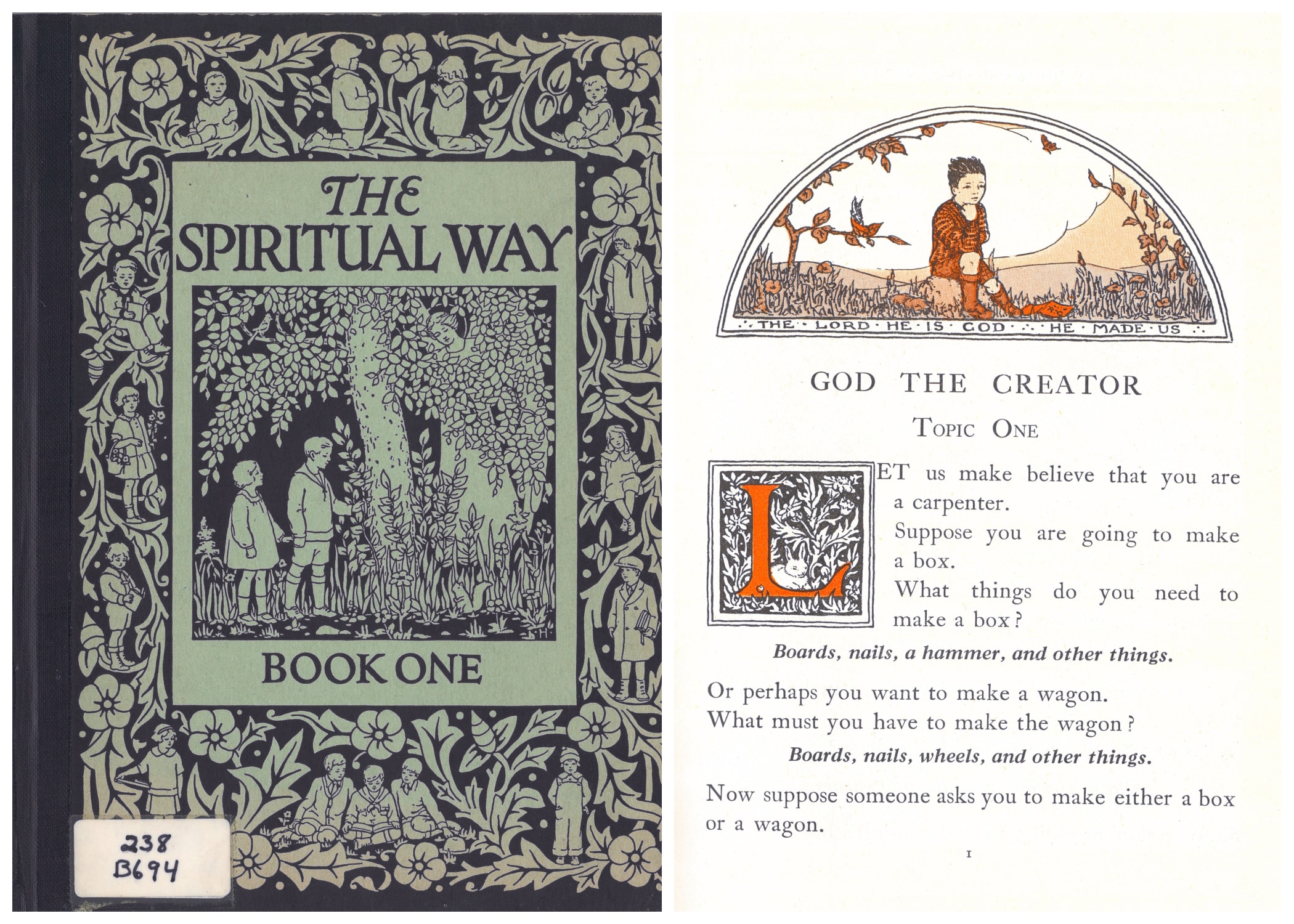
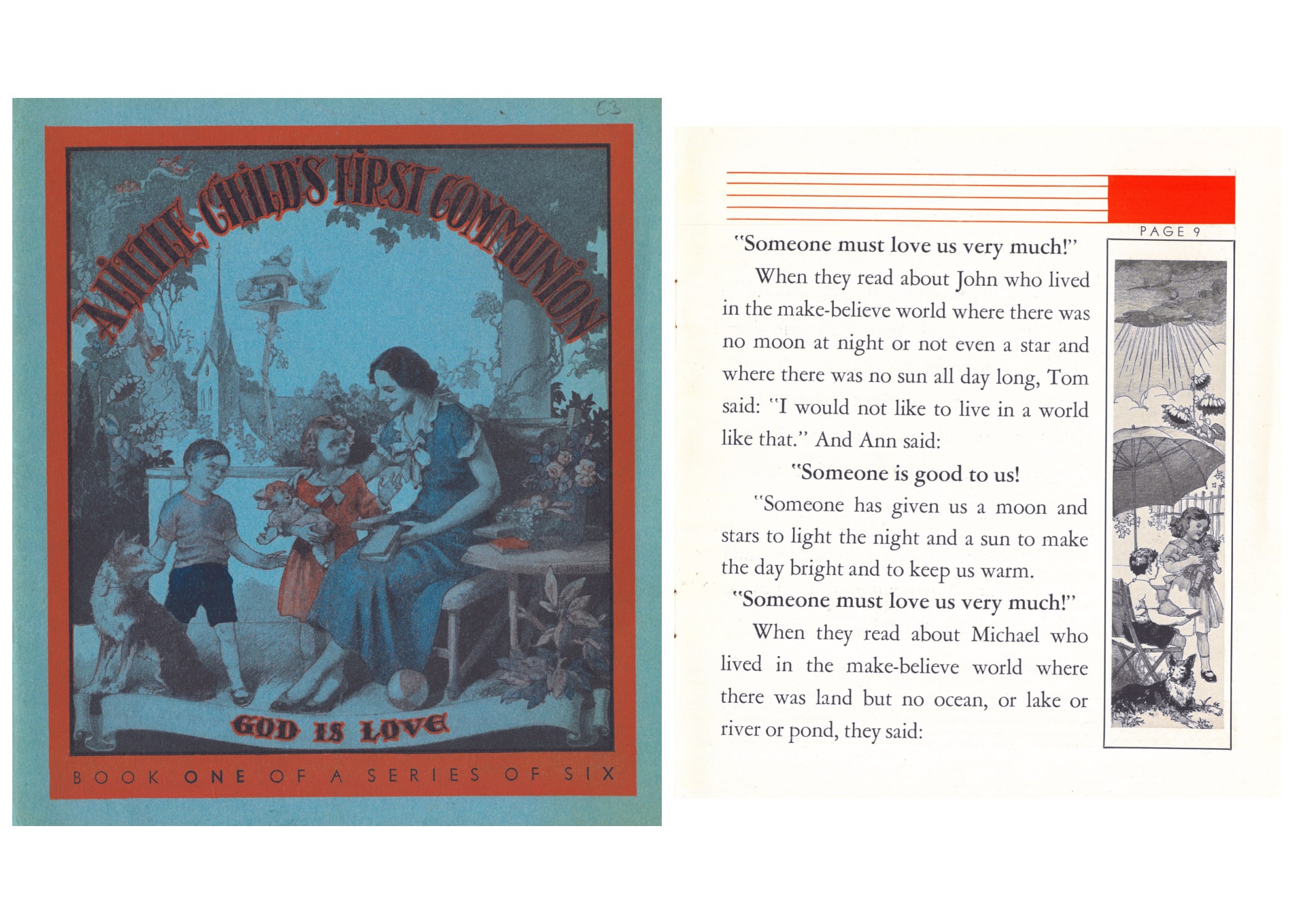
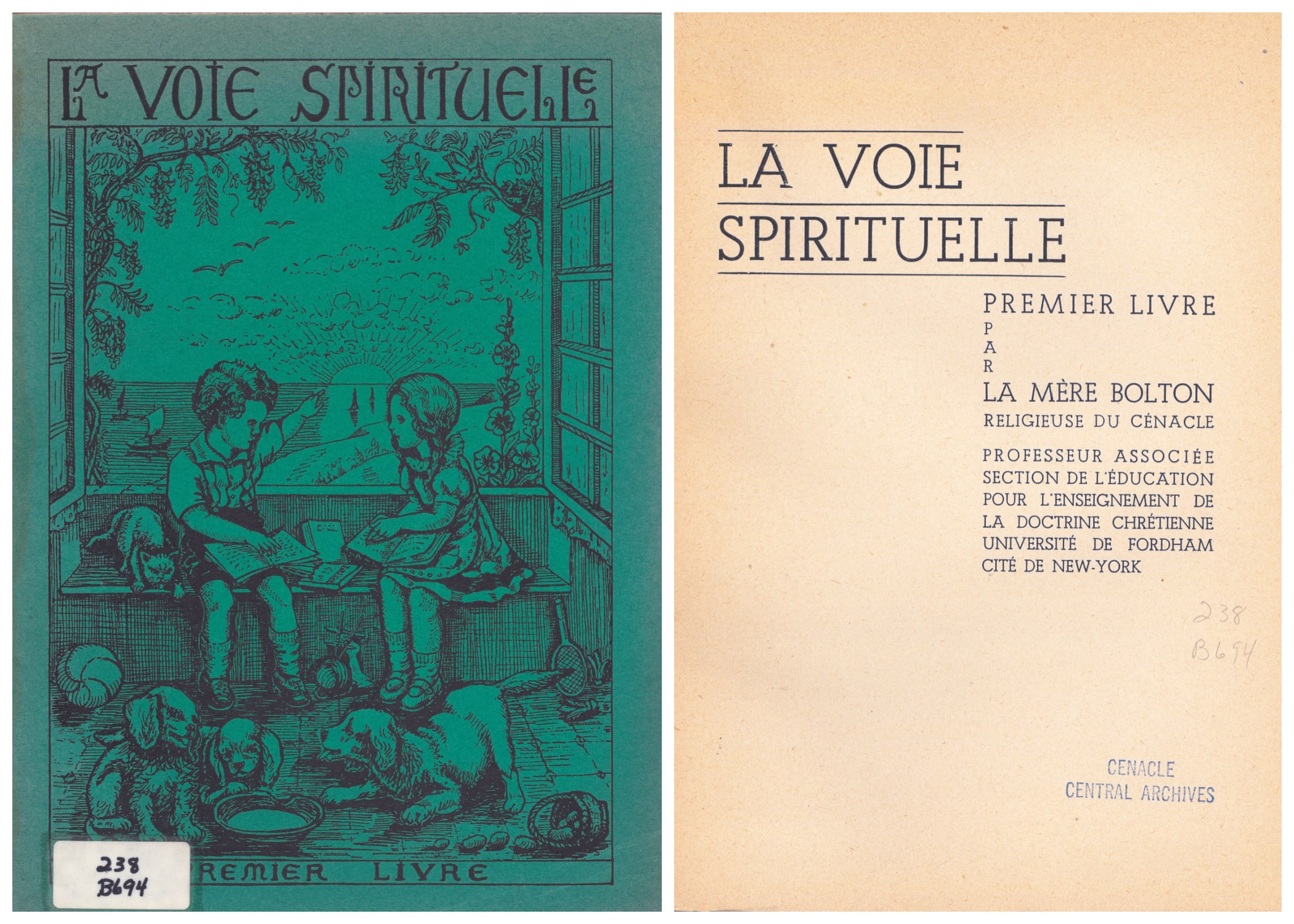
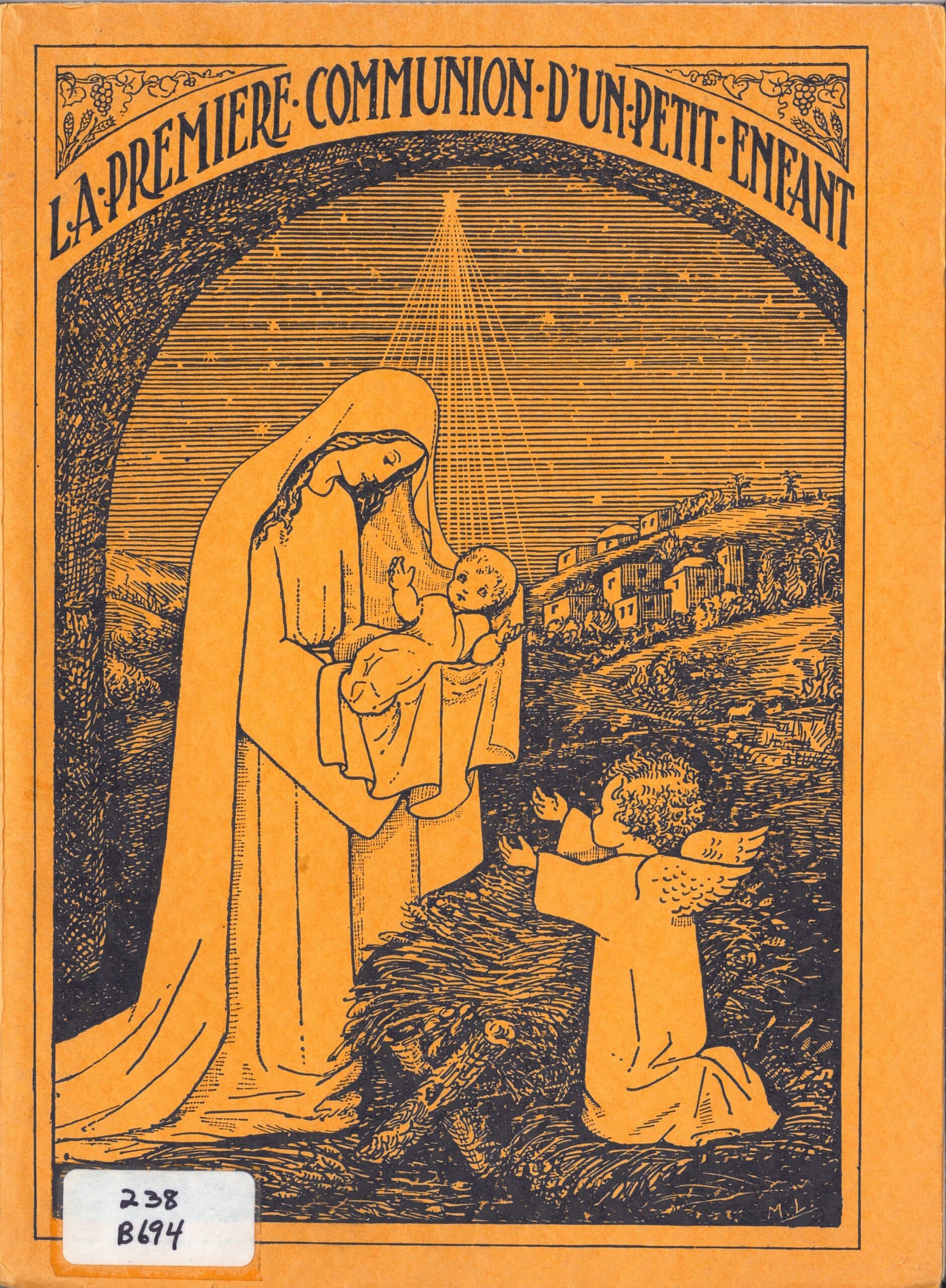
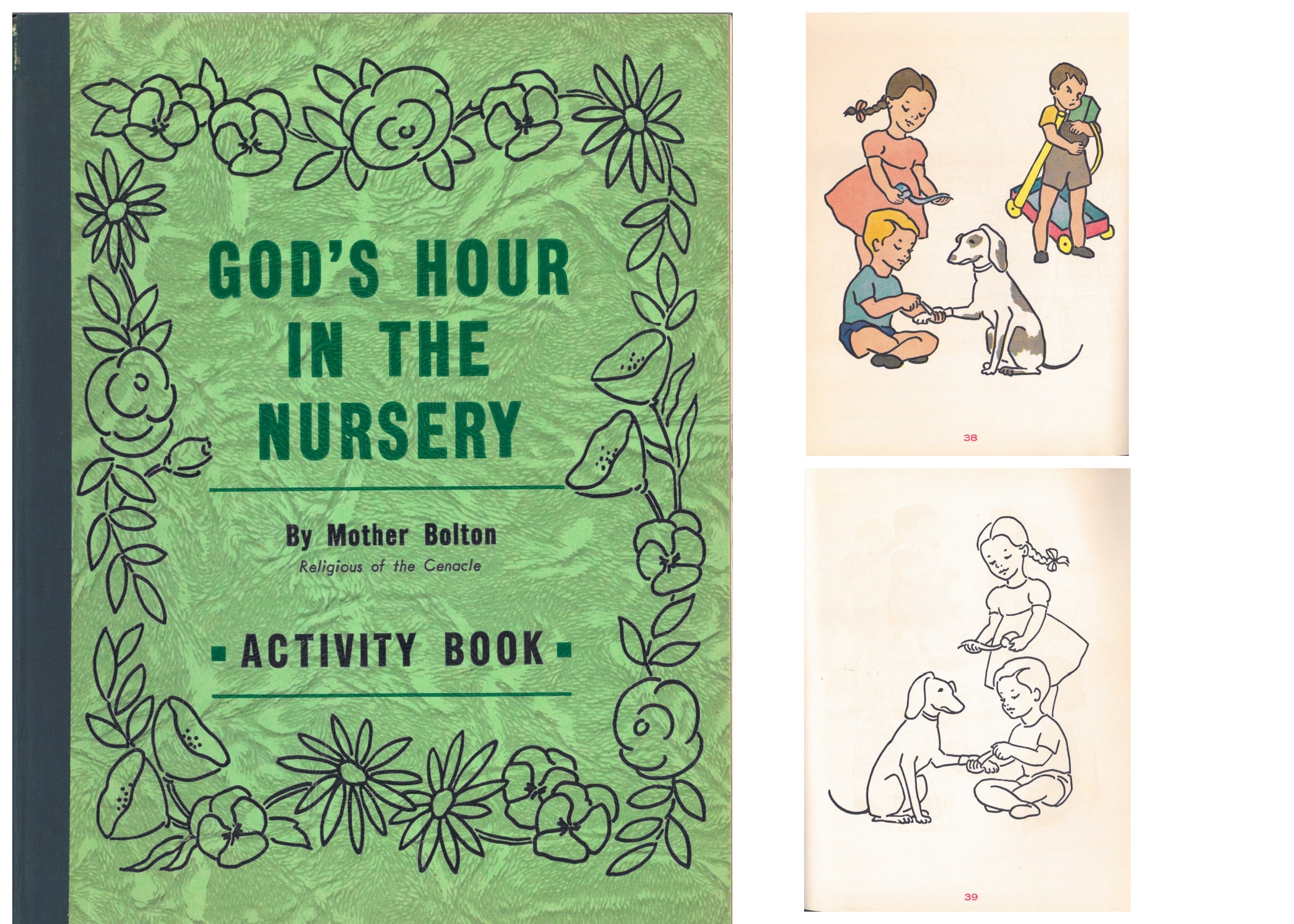
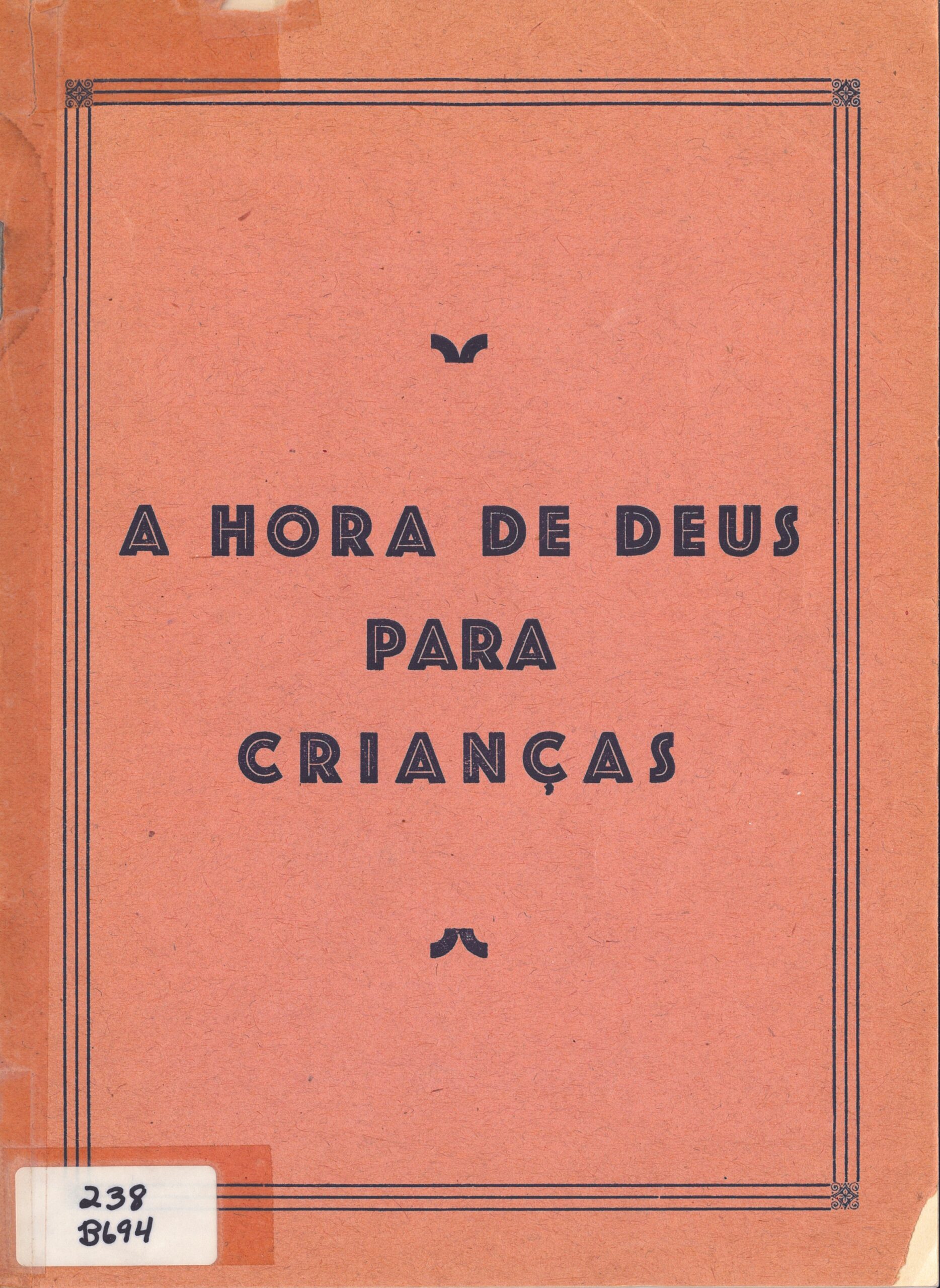
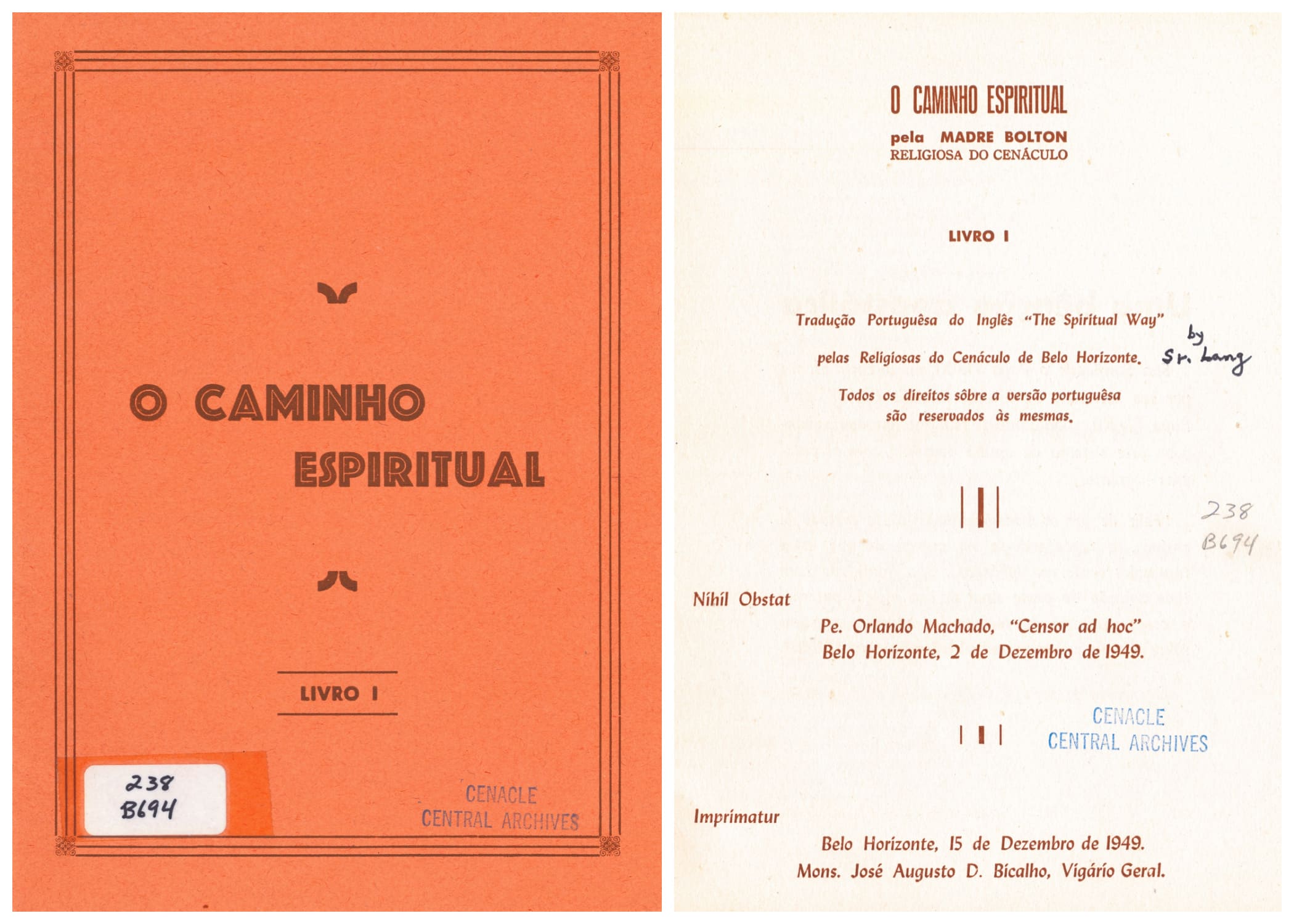
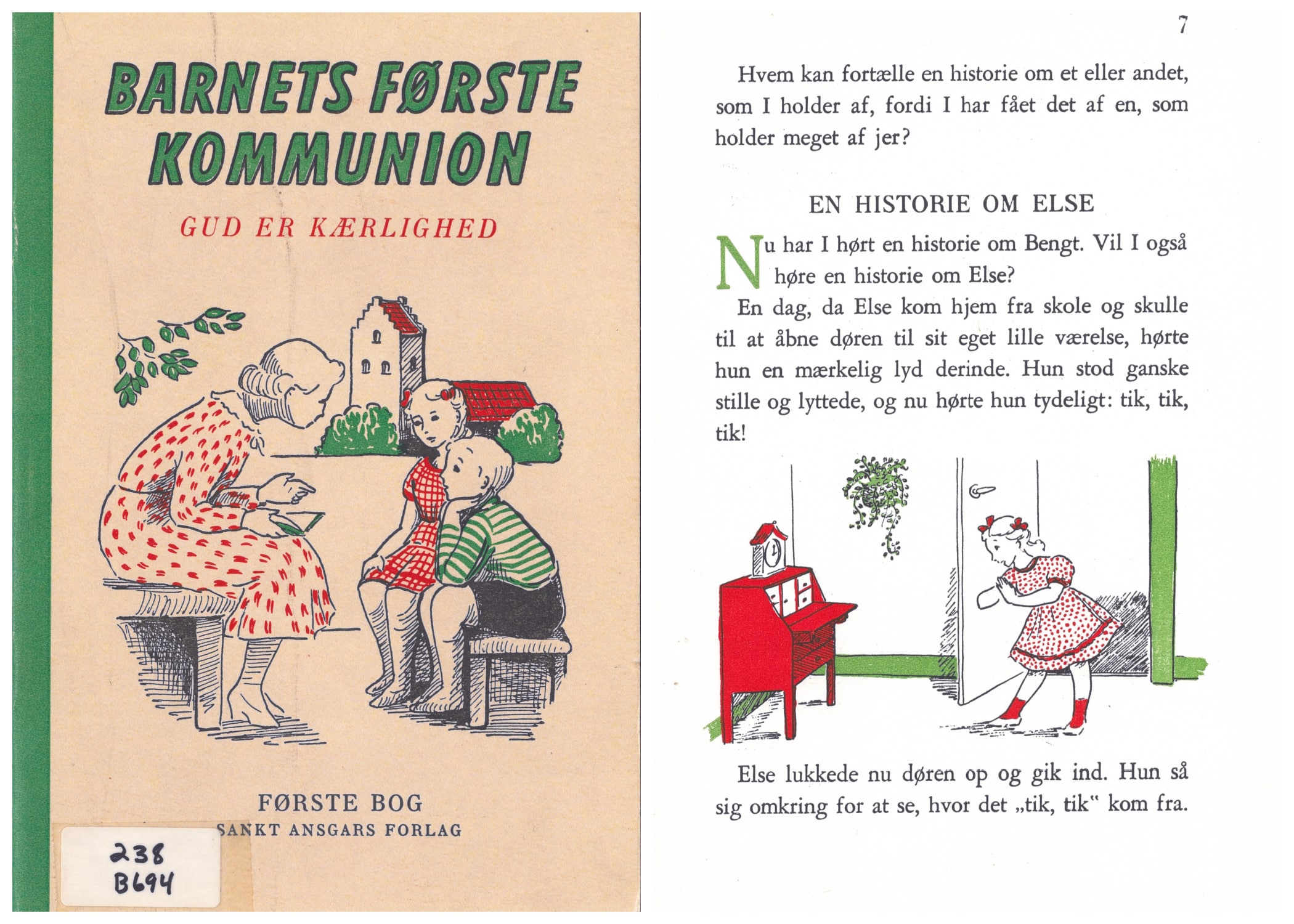
Since 1914, Mother Margaret Bolton had participated in teaching the children of the St. Regis Club and in 1920, Mother Majoux put her in charge and asked her to systemize and publish her teaching methods and materials. In 1928, “The Spiritual Way” was published, with “20 carefully prepared inductive lessons, a preparation for confession, communion, and confirmation.” The book combined the developments in child psychology and the advances in pedagogy to teach Christian Doctrine in a new way. Instead of rote memorization, it trained the children to think, to react, and to have the power to answer intelligently when questioned about Christian Doctrine. An attractive illustrated version published by the World Book Company appeared in 1930, and other publications by Mother Bolton followed, with some books translated into French, Portuguese, and Danish.
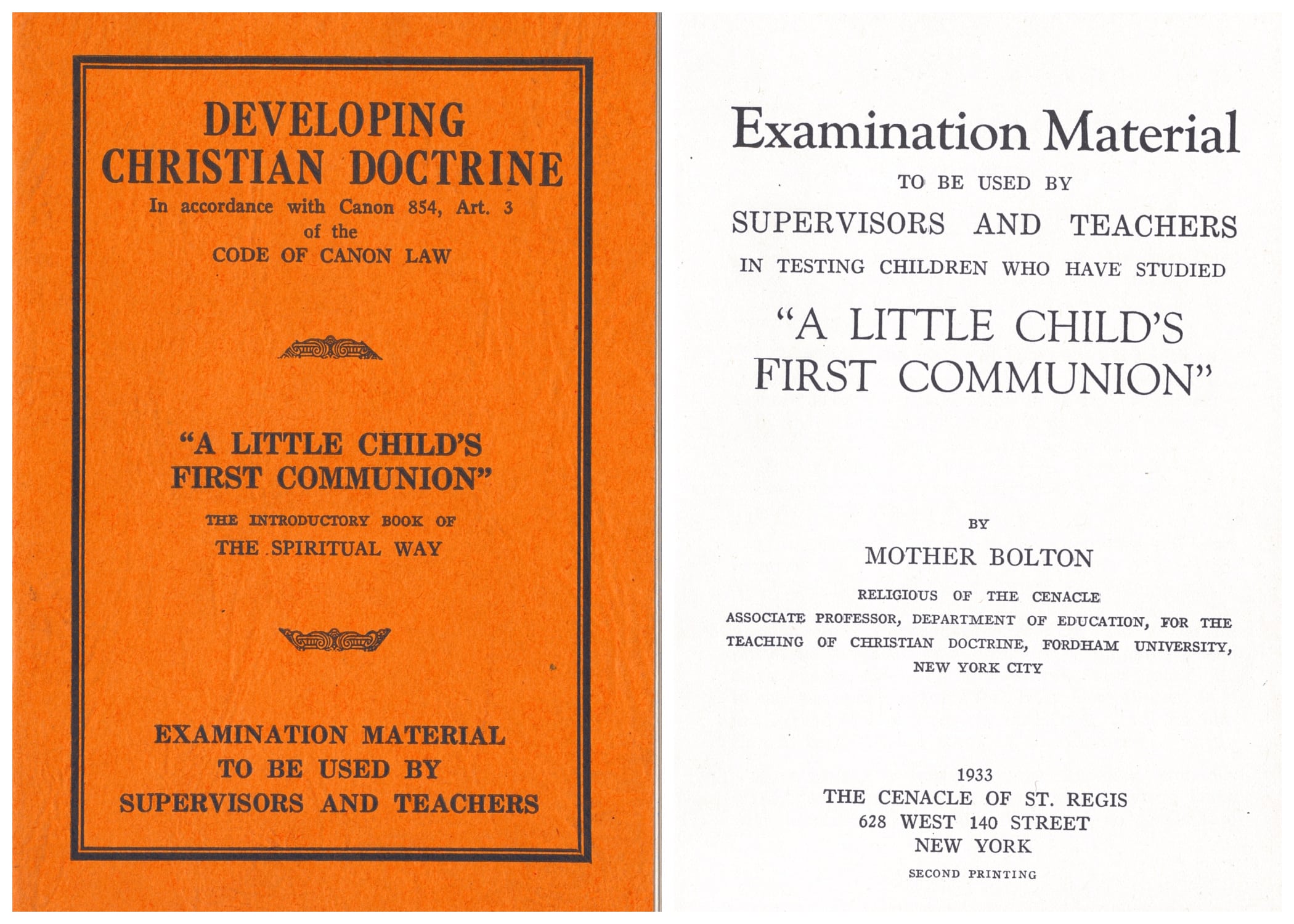
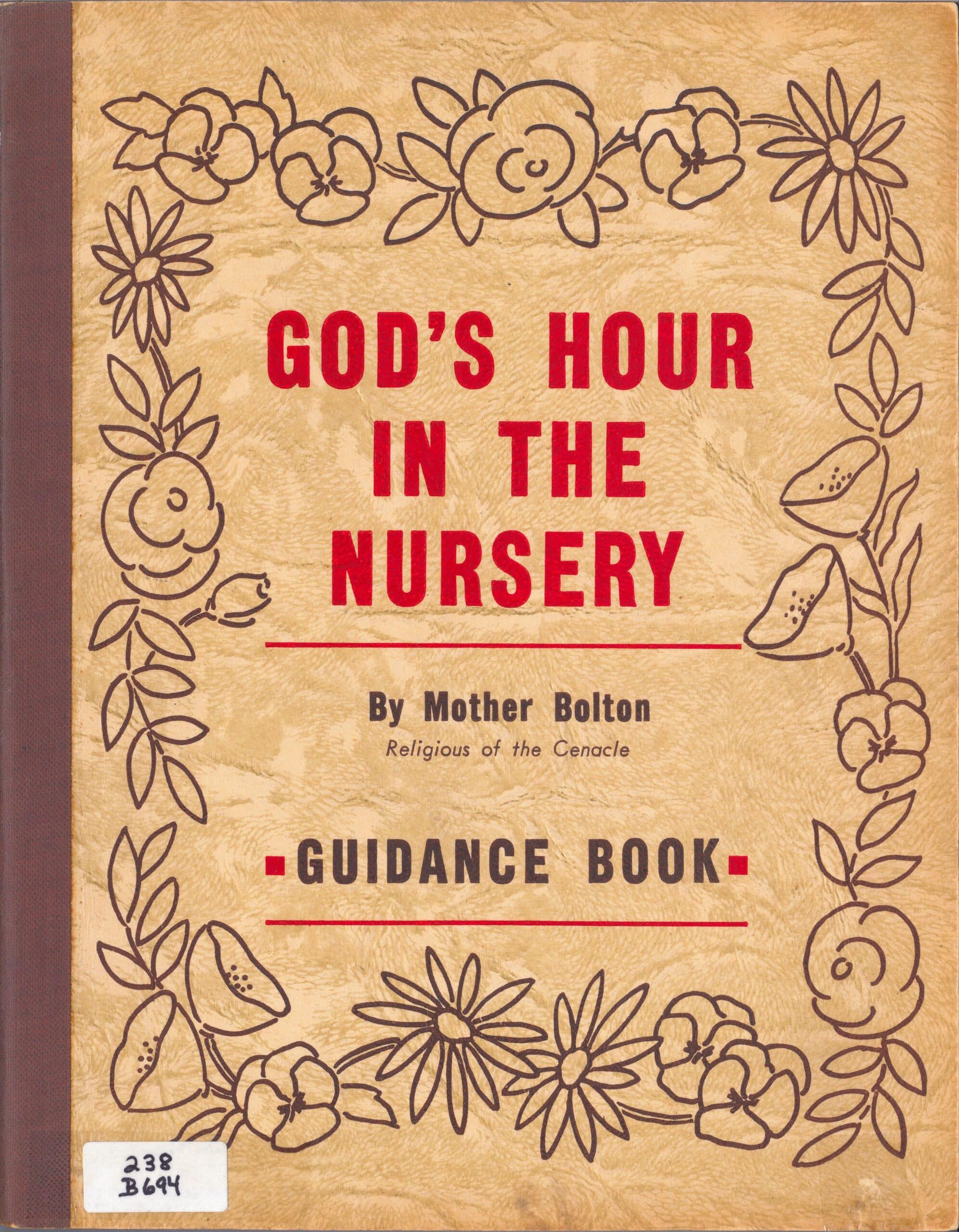
Source: NAP, Sisters Writings Collection
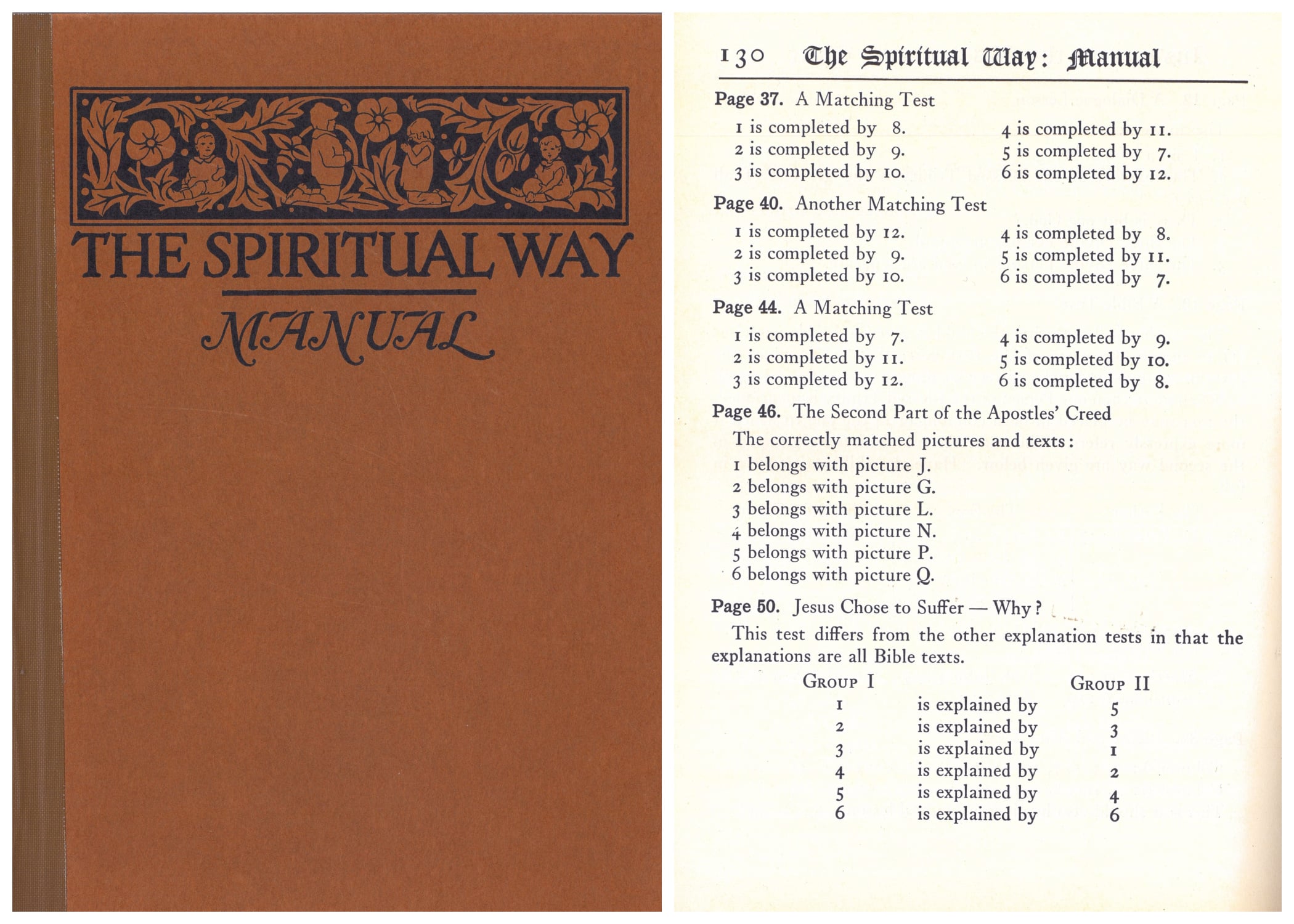
The Spiritual Way Manual, 1930
Mother Margaret Bolton created teacher’s manuals for catechists to use when instructing with her children’s books. She also gave demonstration lessons at the Cenacle, and classes for training teachers according to the Spiritual Way Method were organized for sisters of the various religious orders of New York and Boston, as well as for laywomen. As an Associate Professor in the Department of Education at Fordham University beginning in 1927, Mother Bolton taught Christian Doctrine courses at their Summer School as well as at other universities, using the Spiritual Way Method as the basis of her lectures.
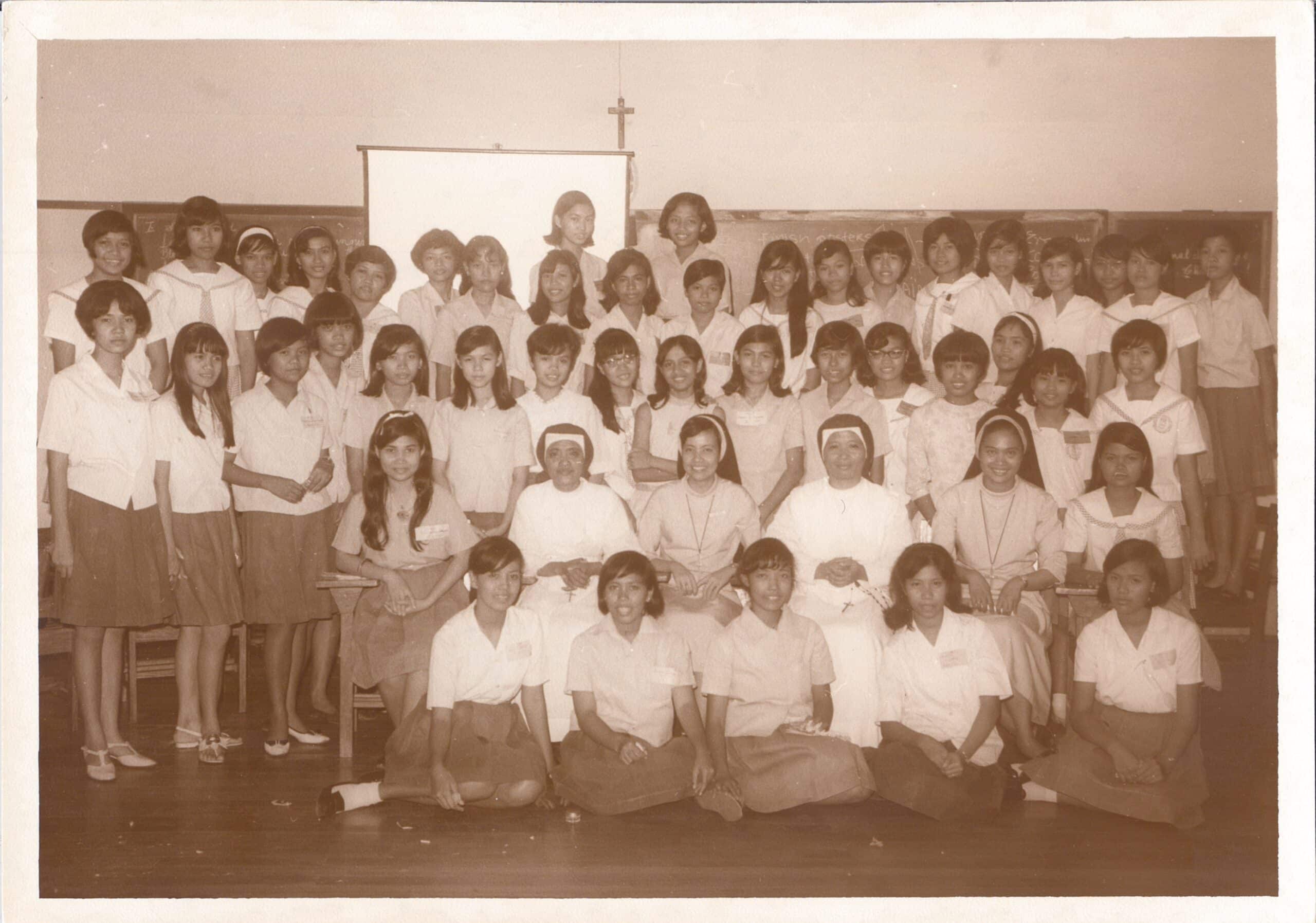
High School Christian Living Experience, Manila, Philippines
Source: NAP, P-III Photographs, PH237_132
In 1968, two sisters of the Quezon City Cenacle Retreat House (Philippines) collaborated with the religion teachers of two public high schools to present “A Day with the Lord” through a Christian Living Experience.
The Cenacle ministry was much in demand in the Philippines, especially retreats and catechism for young people. In December of 1968, just one year after the Cenacle Sisters had made their foundation in the country, Sisters Lily Quintos and Vicenta Saniel led the fourth year girls of the Villamor and de la Fuente High Schools in a Christian Living Experience at Concordia College. Their collaborators in this Experience were religion teachers from the Daughters of Charity of St. Vincent de Paul: Sister Flora Murahina of Villamor High School and Sister Rosa Morgia of de la Fuente High School.
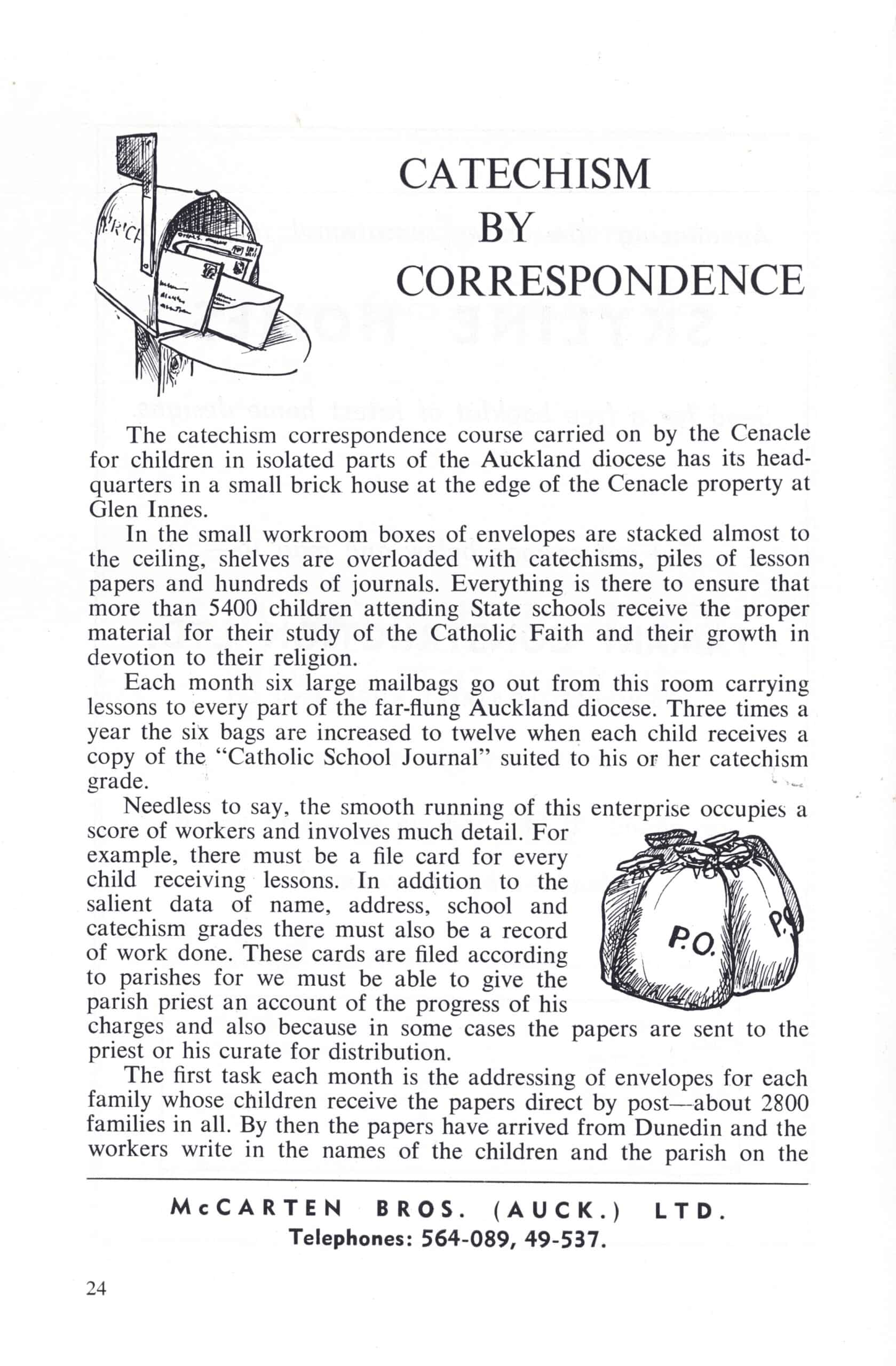
“Catechism by Correspondence” article in New Zealand Cenacle newsletter, 1962
Source: NAP, A-II New Zealand, Box 3
In the mid-1950s, Archbishop James Liston of the diocese of Auckland, New Zealand, asked the Cenacle Sisters to take responsibility for the Correspondence Course in Christian Living. When the sisters first took charge, there were 1,600 children enrolled, mainly from rural areas. The numbers grew rapidly with 5,888 children eventually on the roll.
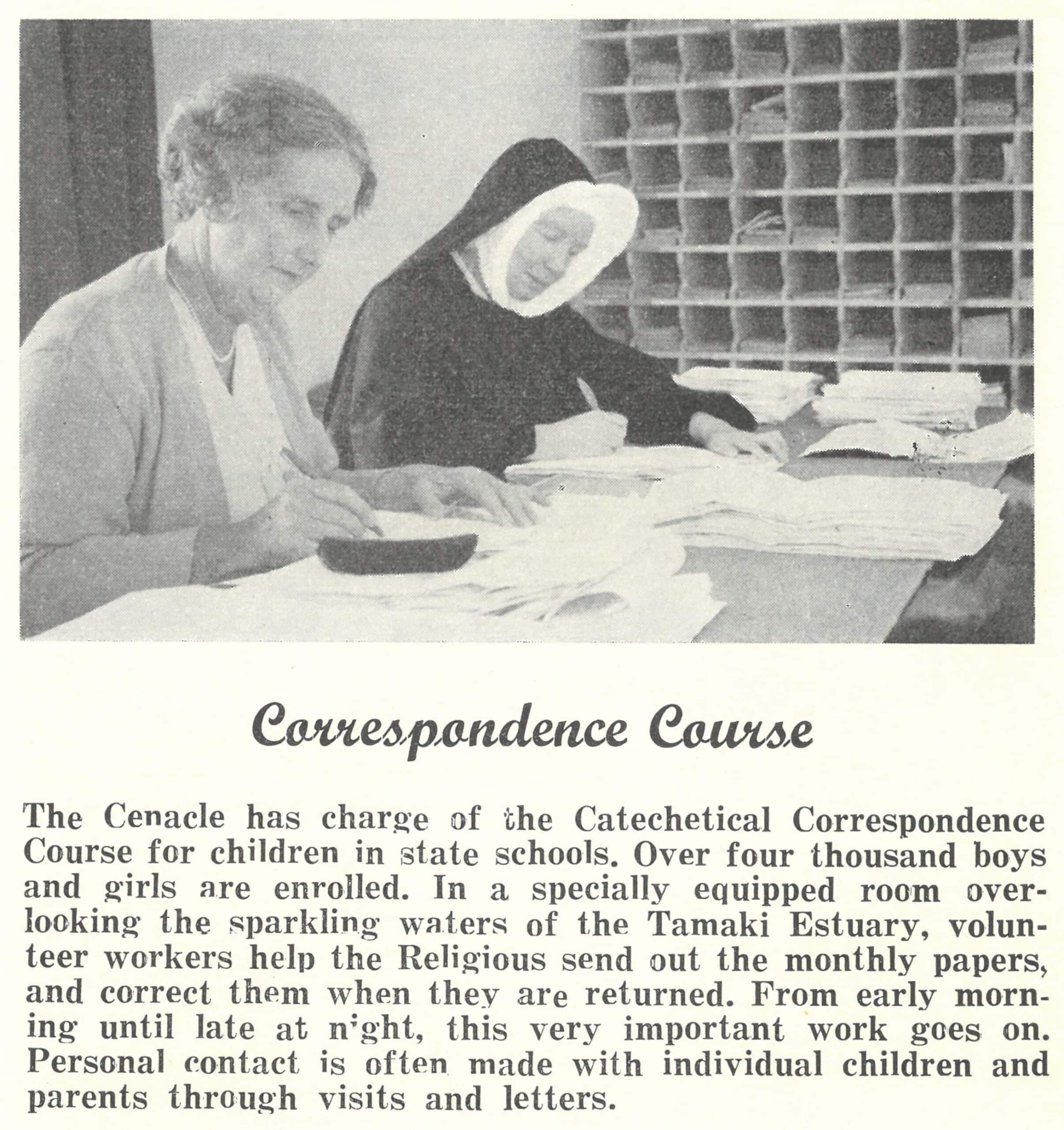
Many laywomen volunteered to help the sisters in this ministry: mailing lessons to the children and correcting the lessons when they were mailed back. A letter from a grateful mother published in the 1962 edition of “The Cenacle” newsletter testified to the effectiveness of this method of teaching: “The arrival of each month’s new catechism paper and the return of the corrected lessons is always an exciting event in our home. The three children are eager to see what marks they have—and they do respond to any encouraging comment—and to look at their new papers. I usually read the new lessons with them individually…The supervision takes infinite patience—not an easy virtue for a busy mother. However, our aim is to put our children on the road to heaven, which is a reward worth every effort on our part.”